Popular Myths at Gray’s Inn: The Night of Errors Part 2
Number 46, Spring 2026
Master Timothy Shuttleworth
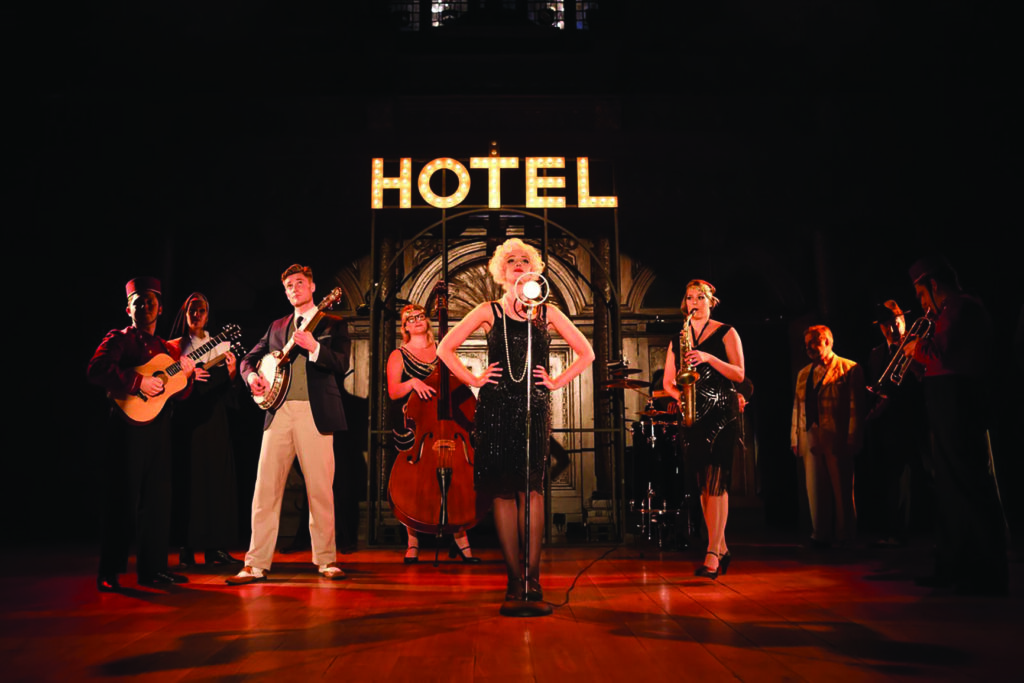
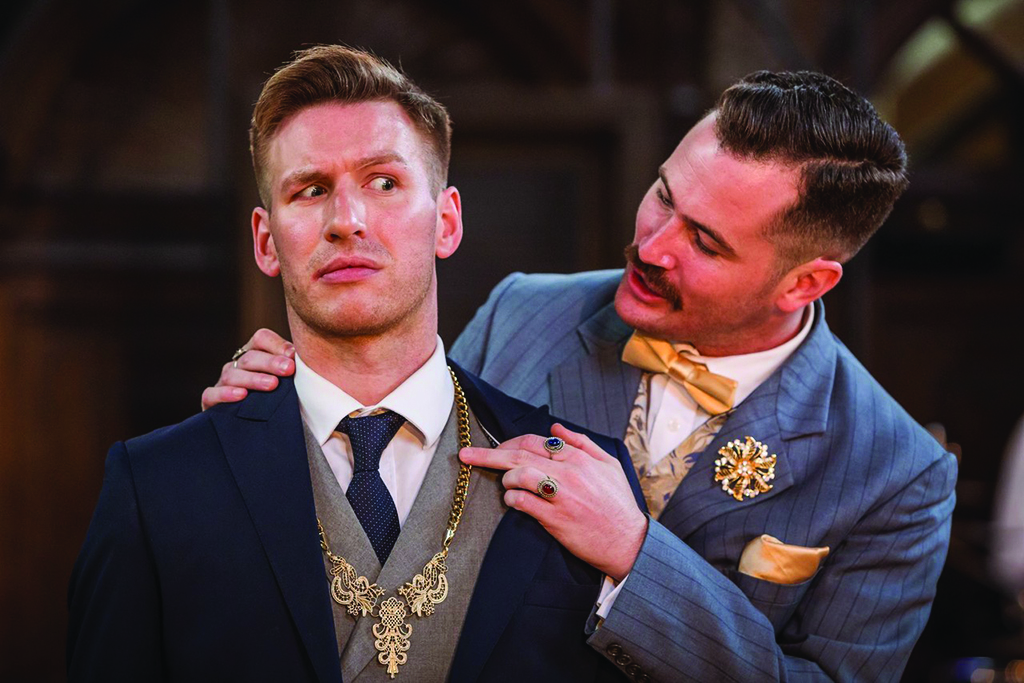
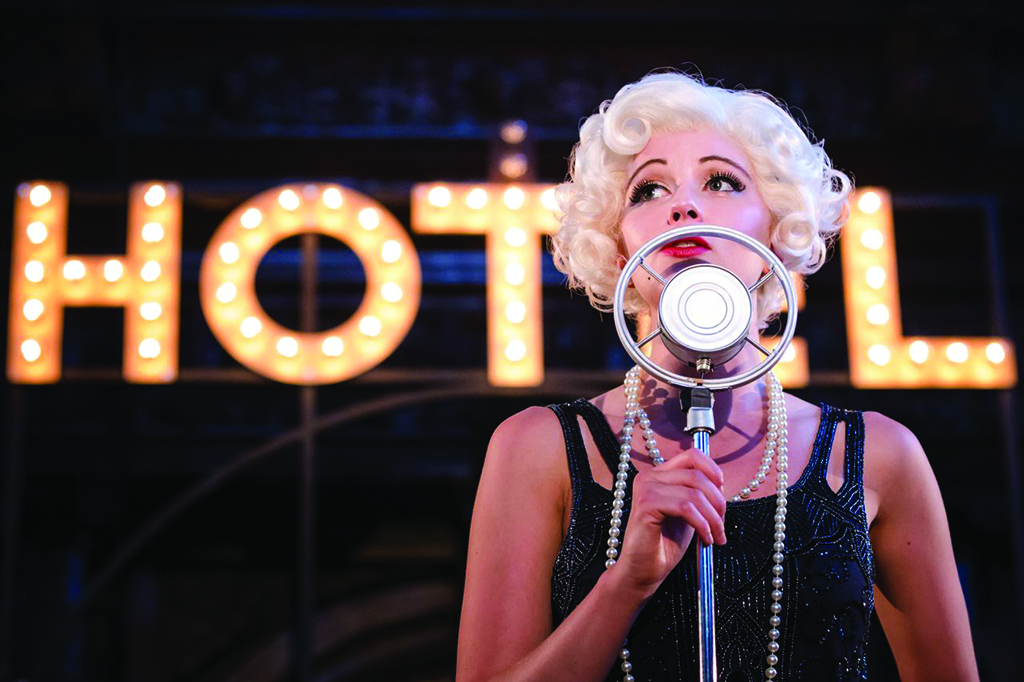
There have been several productions of Shakespeare’s The Comedy of Errors (hereinafter ‘Errors’) in the Hall at Gray’s Inn since its original performance on 28 December. They include in the last 30 years productions in 1994 and 2016, the last being performed by ‘Antic Disposition’ in a zany setting that was described as a blend of Some Like it Hot and The Grand Budapest Hotel. It received a joyous and well-deserved reception.
The 2016 production was played against the screen, as was the production in 1895 (sic) on 14 December that year performed by the Elizabethan Stage Society to celebrate the 300th anniversary of the first performance at Gray’s. Incidentally the production in 1994 was mostly acted against the north wall in Hall on a raised platform which was both curious and disappointing to many, including this writer. A myth has grown up at Gray’s that the original production was set against the screen already in place by the time of the performance in 1594. That belief has been buttressed by many scholarly commentators and even by the Royal Shakespeare Company (‘RSC’).
The myth takes hold
In a commentary on the Stage History of Errors in 2025 and having stated that the first performance of the play was at Gray’s on 28 December 1594, the RSC persists in its long-held view that ‘the richly carved screen at the end of the great hall, with its five arched doorways and gallery above could have provided an excellent background for a specially erected temporary stage’.
By planting the idea, not for the first time, that the original staging ‘could have’ used the screen as a backdrop, the RSC have contributed to the idea that the staging was indeed performed against the screen. Despite it being somewhat counterintuitive, however, the original staging of Errors was NOT performed against the screen.
The myth perpetrated by the RSC has been reinforced, for example, in the Introduction to the Penguin Shakespeare Classics series on Errors in a revised edition (2015) by Randall Martin, Emeritus Professor of English at the University of New Brunswick. He writes:
‘The two ‘Amazonian women’ (in the play) Adriana and the Abbess, strongly defend the integrity of their respective domestic and religious domains. At the original Gray’s Inn performance, their houses were probably represented by the two doors on the Hall screen of Gray’s Inn.’ (my emphasis).
What does GESTA GRAYORUM say?
As indicated in a previous article the only source for the first production of Errors is Gesta Grayorum, hereinafter Gesta, which is a contemporaneous account written by someone, we don’t know whom, and only published in 1688.
Before proceeding further, it is material to point out that Gesta mentions the existence of an actual ‘stage’ in Hall on the night of Errors (and on another subsequent night) which was ‘caused … to be built’, as opposed to referring more to simply to an acting area. Whilst it is unlikely to have resembled any formal classical style structure, it does suggest something semi-permanent. Here l adopt what Charles Whitworth, formerly Professor of English Literature at Montpellier University and Editor of The Comedy of Errors Oxford Shakespeare series (2002), writes:
‘The allusion to’the stage’ in ‘Gesta …seems to imply that it was already there in place before the aborted entertainments of the Innsmen gave way to the performance of ‘Errors’ by the professional players …’
If that is correct, it is unlikely that ‘the stage ‘ would have been up against, or indeed near the screen as the stage structure, no matter how menial, would have obstructed access to the Hall from the west end for the scores of Gray’s Inn members expected on 28 December and their equally large number of guests. Wherever it was located, it couldn’t possibly have been in situ against the screen on 20 December 1594 either, eight days before Errors, because on that evening the Prince of Purpoole’s ‘champion’ entered Hall, dressed in full armour ‘on Horseback’, and rode towards the dais to address the Prince ,who sat there in state, with his Court. It is also important to add that the focus of all the entertainment during the Christmas festivities of 1594/95 was upon the Prince on his throne on the dais including on 3 January 1595 when there was ‘a most honourable Presence of Great and Noble Personages’ (per Gesta) that included the Lord Keeper (Sir John Puckering), the Earls of Shrewsbury, Northampton, Cumberland, Southampton and Essex, and Lords Burghley, Rich, Compton, Mountjoy and … Sir Robert Cecil.
I turn now to the most exhaustive examination of the first staging of Errors at Gray’s in an article appearing in Theatre History Studies (January 1984). It was written by Margaret Knapp, then Assistant Professor at the Graduate School of the City University of New York, and Michal Kobialka, then a doctoral candidate at the same University. The article is headed ‘Shakespeare and the Prince of Purpoole: The 1594 Production of The Comedy of Errors at Gray’s Inn Hall.’
It is impossible to set out here every part of the argument in that excellent academic study that points strongly away from the performance in December 1594 being acted against the screen. I shall, however, describe the look of Hall in 1594, the measurements thereof being much as they are today, and relying heavily on Knapp and Kobialka, I add their conclusion:
(1) There was a dais in Hall at the time, as now, at the east end where the Prince of Purpoole (a student, Henry Helmes), his princely Court retinue, and important guests would be seated watching events during the student Christmas festivities including on 28 December. These festivities covered several nights beginning on 20 December and lasting until Shrovetide ‘when the gentlemen’ of Gray’s Inn performed the Masque of Proteus before the Queen at Greenwich’.
(2) On the north and south sides of the Hall there were tall scaffolds on which the audience was seated for the performance of Errors and any subsequent spectacle during the Christmas season. This is clear from Gesta.
(3) Below the dais was a fireplace located underneath where the louvre in the roof still exists today.
(4) So where was the stage? The key to answering that question, and to the solution, is the description of Hall to be found in Gesta for the festivities on 3 January.
After the masque that night and a running buffet, ‘there was a table set in the midst of the Stage, before the Prince’s seat’ (ie below the dais) and ‘there sate six of the Lords of the (mock) Privy Council’. We know from an earlier description in Gesta that the ‘Privy Council’ had previously sat at a table below the dais.
Knapp and Kobialka conclude that the stage must have been in the space directly in front of the dais between the dais and the fireplace adding: ‘If it (the stage) were in front of the Hall screen, as it is usually conjectured to be, it would be at the opposite end of the Hall from the Prince (seated on the dais), and therefore not very tempting as a seat for (him and) important guests … ‘.
Both academics accept that the stage area would be very limiting but make the point that there would be nothing to stop the players broadening the playing area by using the space between the scaffold seating located hard against both the north and south walls, the area in-between having been cleared of any tables or chairs to permit the earlier dancing and revelling in Hall.
In his Note on the play published in the impressive souvenir programme to celebrate the 400th anniversary production of Errors in Hall between 12 December and 17 December 1994, the late Nigel Miskin, (whose son incidentally, now Master Charles Miskin, produced the 1994 production of Errors) clearly draws attention to the work of Knapp and Kobialka, who are mentioned in a footnote, when he writes:
‘A careful study of the layout of the Hall as it probably was in 1594 has suggested that the stage would have been erected towards the eastern end where, it is assumed, the Prince of Purpoole and his court would have been seated on a dais … ’.
Having written as much, Miskin immediately follows with this passage in which he hedges his bets by not wholeheartedly embracing the work of Knapp and Kobialka:
‘An alternative view is that the stage was nearer the great screen … In that event the screen would have provided an arcade setting then thought to be in the Roman stage tradition … ’.
And so the myth that the original staging of the play was performed against the screen continues to hold sway … perhaps because it is more attractive and better appeals to the imagination of many.
Popular Myths at Gray's Inn: The Night of Errors Part 2
Read The Night of Errors Part 1, published in Graya News Autumn 2025.
Explore more from this edition
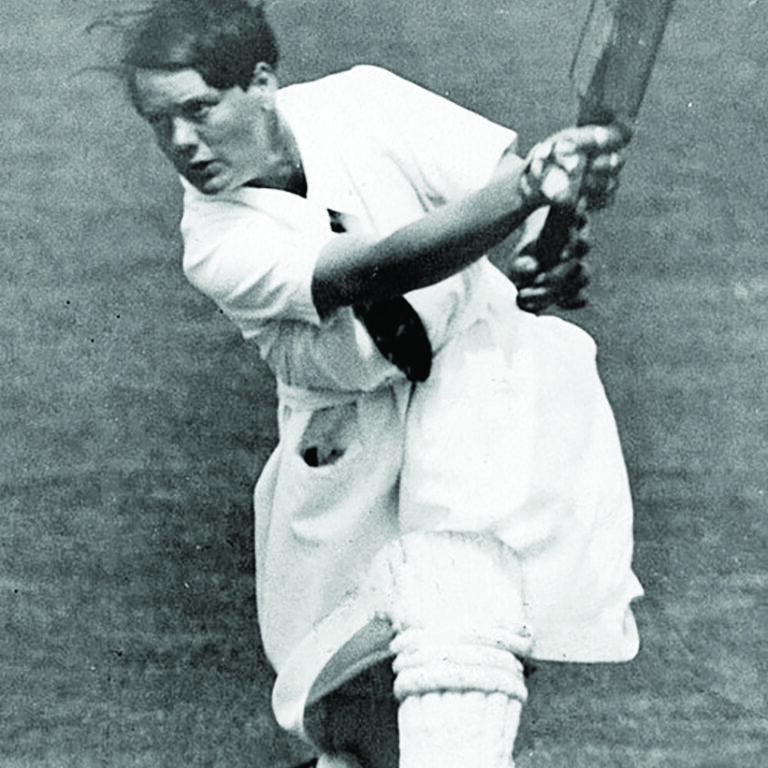
Betty Archdale: A Gray’s Inn Pioneer
A trailblazing cricketer, barrister and equality advocate, Betty Archdale’s career spanned sport, law, wartime service and education – an extraordinary life of determination and public duty explored in Master Christopher Butcher’s article.
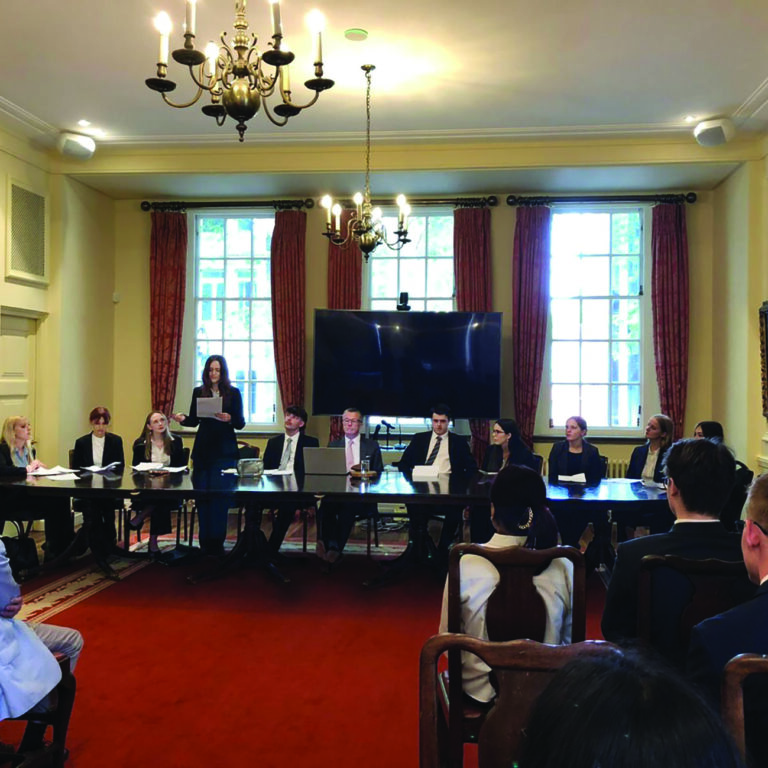
Lord Edmund Davies Legal Education Trust
Ten Welsh students spend a week at Gray’s Inn through the Lord Edmund Davies Trust, gaining rare insight into legal London through shadowing, marshalling, mooting and talks honouring Edmund Davies’s legacy.
Griffins in the Inn
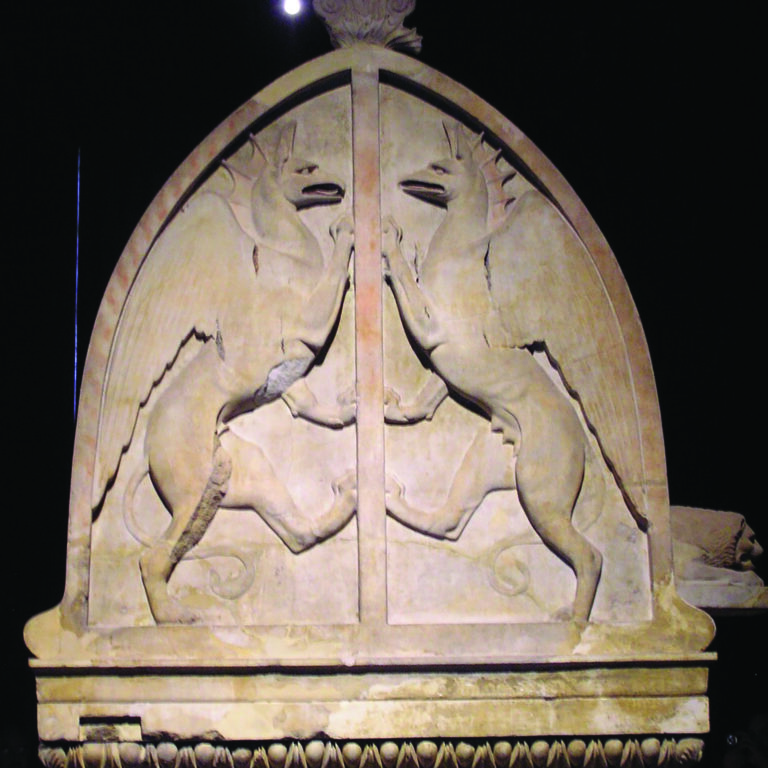
Griffins adopted around 1590 with debated origins, possibly replacing Thomas Grey’s arms; the mythic eagle‑lion symbol embodies vigilance and courage, becoming a fitting guardian of Gray’s Inn identity.
The Employed Bar: Many Paths, One Profession
A panel highlighted the Employed Bar’s diverse careers, showing how practitioners across government, private practice and the armed forces find intellectual challenge, purpose and impact in flexible, service‑driven employed practice.