Gray’s Expectations or What the Dickens!
Number 46, Spring 2026
Master Christopher Russell (Text and Photos)
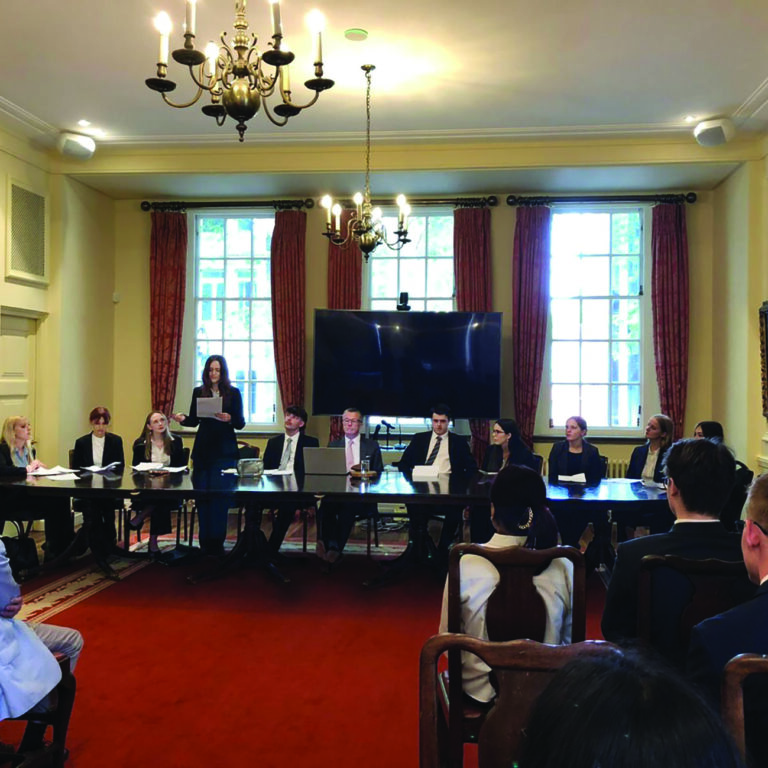
Charles Dickens holds a cherished place in the heart of the Inn. But it was not a mutual affection. He described it as ‘one of the most depressing institutions in bricks and mortar known to the children of men’. In her esteemed biography, Claire Tomalin recounts how the future author, fresh out of school at 15, began his professional life as a clerk for Ellis & Blackmore, solicitors, in May 1827. That was in offices in what is now South Square, where he worked for 16 months for, initially, 10/6 a week. In Tomalin’s words, ‘he was eager to live the life of a young Londoner… The dandy of the late 1830s was already forming’. His experience found its way into The Pickwick Papers in 1836 and many other novels. It is significant that when Dickens thought about becoming a barrister, it was at Middle Temple that he entered his name, in 1839, not Gray’s.
Miscellany 2025 celebrated Dickens coming to the Inn 198 years before with a spirited and witty production scripted by Chantelle Staynings, Harry Samuels, Kabir Sondhi and Zander Goss which not only touched upon many of his novels, in a delightfully chaotic mélange of plots, but also portrayed other celebrated Victorians. If there was a thread through the mayhem, it was the tale of the life of Archbold Blackstone, played as a child by Mary Lobo, as a young man by Patrick Cole and in old age by George Penny in a metamorphosis of characters recalling Pip to Scrooge.
The set, created by Roddy Gye and his team, was essentially a black box stage with, front stage left, a tiny oasis of Victoriana with oil lamp, Puginesque wallpaper and writing desk where Dickens, played by James Sharp, scribbled almost throughout, often attended by Isabella Massam as his long-suffering wife. Onto this stage strode Stephen Cartwright, tartan-trewed, to deliver a housekeeping message in rhyming neo-Victorian doggerel.
Harry Samuels introduced Dickens and his writing life performing ‘The Routine of the Writer’ (a song specially written by the extraordinarily gifted Robert Coren) joined on stage by many of the characters who would, in the ensuing two hours, tell their stories in a clever sequence of scenes and songs.
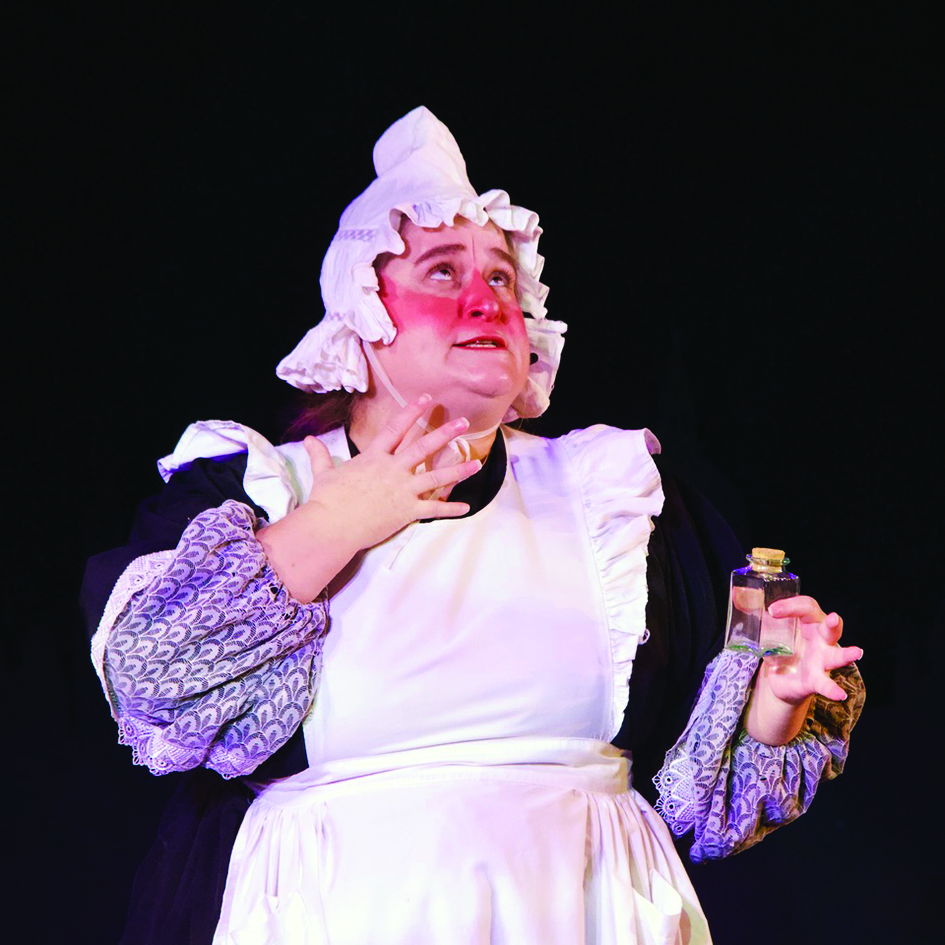
James Sharp’s Dickens begins the story in a provincial workhouse filled with inmates guilty only of the crime of being poor where Natalie Bird, as the mother of an infant Archie, leaves him with few items but including copies of Archbold and Blackstone. He is taken in by Mr and Mrs Bumble (pron Boomblé), played by Conor Walsh and Sandra Villani. The latter, deploying her womanly instincts, nurtures him with gin, names him after the volumes and consigns him to workhouse life.
Archie leads a troupe of fellow orphans (Kieron Spoors, Pearl Crumb, Chester Chan and Tanya Drobnis) in voicing dissatisfaction at their lot and reminiscing about eating their deceased inmates – red letter days when meat took the place of gruel. Archie calls for ‘More’ and on being threatened with being pushed downstairs and becoming tomorrow’s supper, determines to run away from the workhouse to London to find his fortune (or become a Deliveroo rider). Aghast to hear her beloved gin is running short, and that vodka is acceptable, Mrs Boomblé launches into a rendition of ‘Vodka’ from Song of the Flame with a raw alcoholic brio.
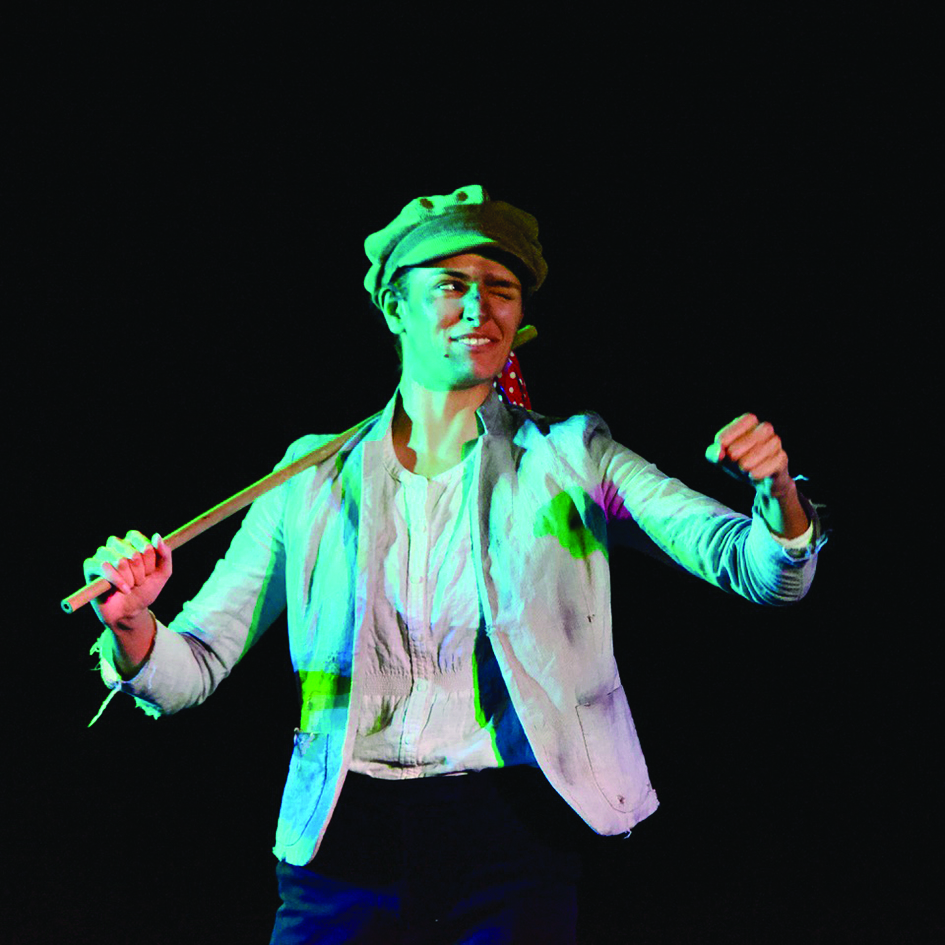
Lost in the Kent marshes, in a scene recalling Pip’s terrifying meeting with Magwitch, Archie encounters then befriends Abel Gagwitch, in convict’s cap but with an inflated rubber ring around his neck and armed with a banana, who has swum from Australia after serving a sentence of transportation, played with wonderful mock malevolence by Marcus Taverner.
In his despair Archie is comforted by the ghost of his mother who entreats him to trust ‘The Voice Within’ with a moving performance of that song worthy of Christina Aguilera.
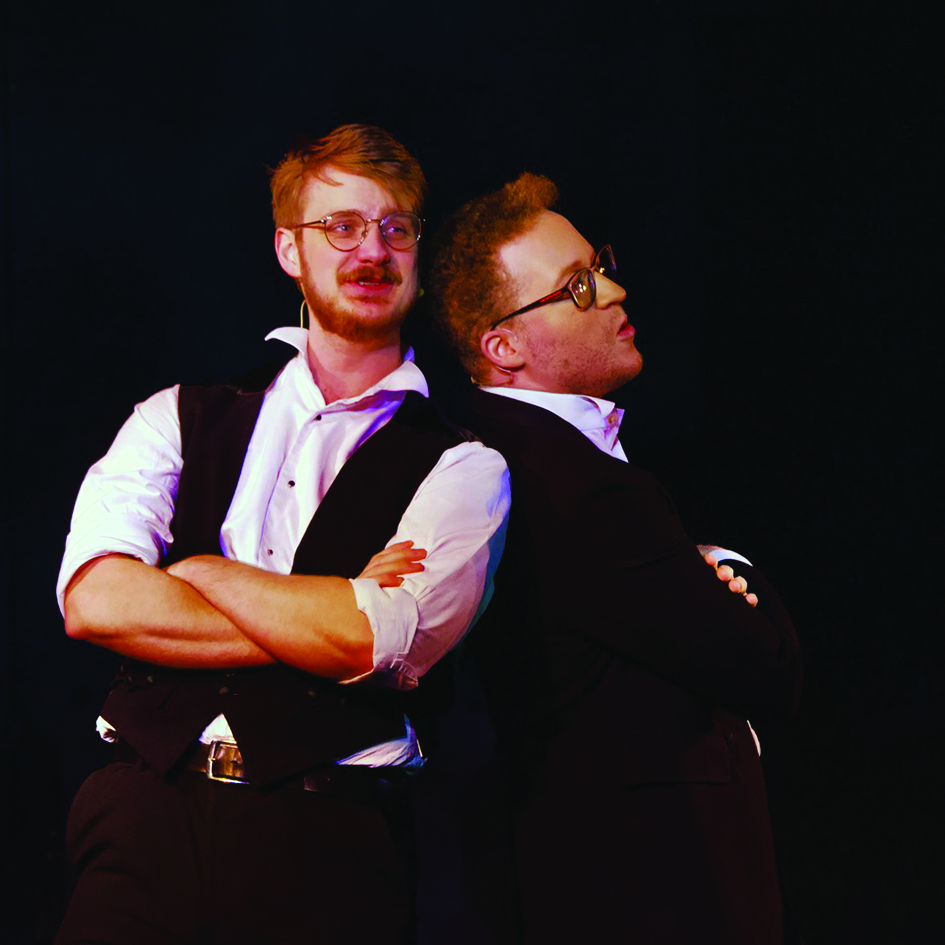
We say goodbye to Mary Lobo as Archie. What fabulous new talent the Inn has in her; hers was a seam of highly accomplished acting throughout Act One. In Act Two, with Archie played engagingly by Patrick Cole; we move, to tell a tale of two cities, and find him reading for the Bar at Gray’s Inn. His fellow students are the orphans from the workhouse drilled magisterially by Nia Frobisher as Cuttwitt Sharpe QC, assisted by Britney, played by Sarah Joseph, with whom Archie falls in love. Archie is instructed in Thucket v Thucket, litigation of great vintage worthy of the pages of Bleak House, to retrieve Madame Défarce (Katharine Elliot), imprisoned since the Revolution and the heir to the Thucket fortune.
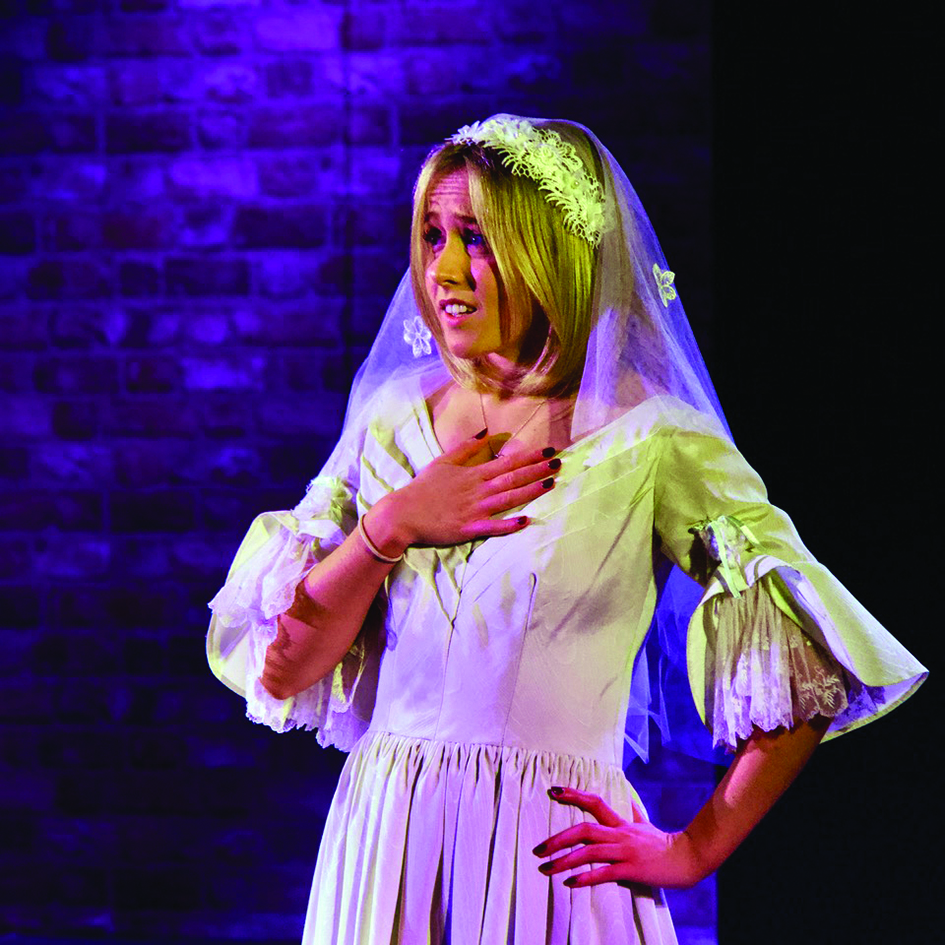
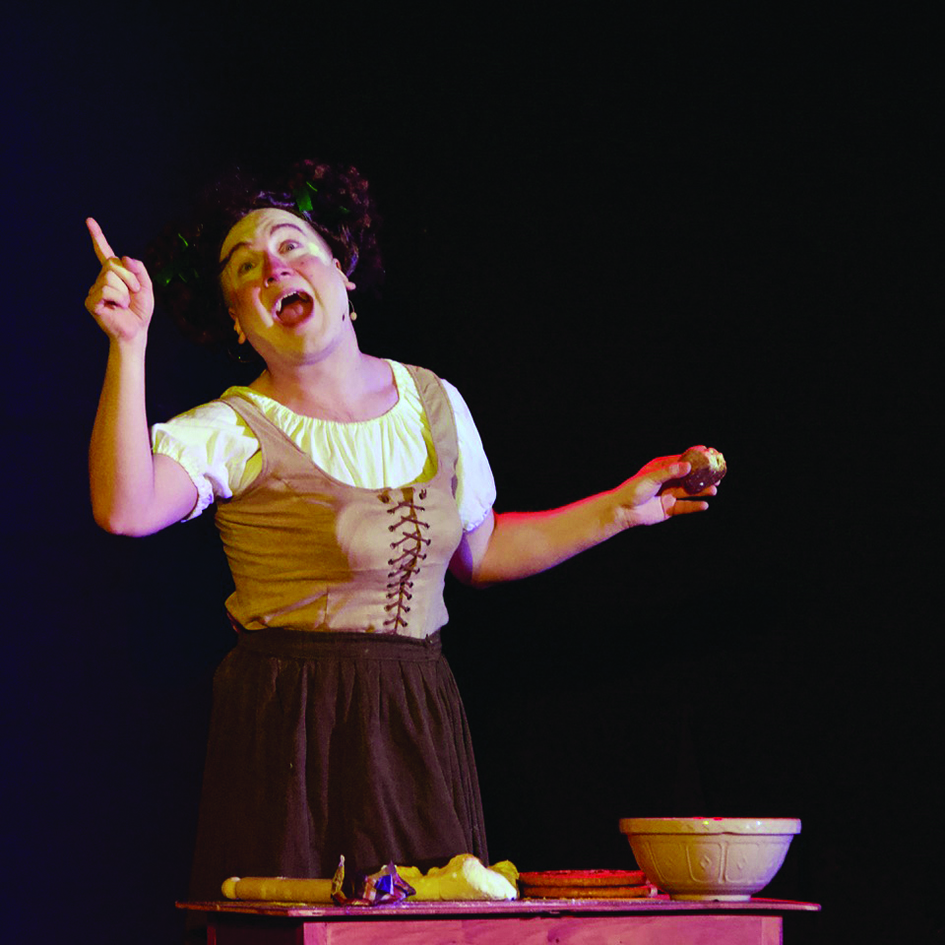
Arriving in London, Archie finds the pie shop of Mrs Scrubbit (Harry Samuels) who bemoans her incompetence in pie-making with ‘The Worst Pies in London’ from Sondheim’s Sweeney Todd. We enter Twist territory when he meets the Artful Dodger (Kayode Aseweje) who promises him refuge at the lair of Fag-End (Kabir Sondhi). Fag-End introduces him to his artful codgers, a troupe of bewigged ancients (Colin Manning, Elle Curzon, George Penny, Liam Chin, Libby Anderson and Lucinda Orr). It was good to see Colin Manning back treading the Miscellany boards and he leads an explanation of their MO as decrepit judges with ‘You’ve Got to Clear a Docket or Two’ parodying the Lionel Bart number. Enter Bill Sykes (Tom Jones) with an accent appropriately wandering from South Wales to Dagenham, with, not Bullseye, but Fluffy McFluffy as a dog tucked under his arm. He wants to return to Llandudno to open his café-cum-bookshop and serve cappuccino. Saara Idelbi, as his Nancy, varies her ‘Where were you last night?’ with a raunchy rendition of Bon Jovi’s ‘You Give Love a Bad Name’. A top-hatted policeman (Tim Lamb) arrives to arrest Fag-End who throws to Archie incriminating evidence belonging to Betsy Trot-On (Penny Hamilton), Archie’s step great aunt thrice removed. Chastened by his brush with the law, Fag-End sings ‘Reviewing the Situation’ with all the wiliness of the best of Fagins and terrific accompaniment in klezmer style from the band overflowing with talent led by Robert Coren, comprising Damian Falkowski (violin), Curtis Crowley (clarinet) and Nora Wannagat (baritone sax).
Michael Burton plays Uriah Heep, styled as Archie’s clerk who explains his role with ‘I Am the Clerk, Signor!’ lyrics he wrote to the tune of Bizet’s Toreador March. Bereft at Archie’s departure, Britney sings ‘Can’t Help Lovin’ That Man’ from Show Boat in a performance of exquisite sweetness and purity.
Archie arrives in Paris with his companion, Nathaniel Orphan (Lemuel Lucan-Wilson). Together they celebrate their survival of the channel crossing with the Friends theme ‘I’ll Be There For You’: every inch carefree young bucks in the French capital. They find Défarce, a two-fan-waving revolutionary with spitting contempt for barristers as the tools of the Ancien Régime, content with her life in an abandoned prison and unaware the revolution is over. She recalls her caged existence with ‘Green Finch and Linnet Bird’, another song from Sweeney Todd. Meilleur (Conor Walsh), Lapire (Isabella Massam) and Moyenne (Elena Johnson) perform the totemic opening sentence from the novel.
Back in London, we are introduced to the judges of the court of Chancery allocated to the Thucket case, Sir Davey Dickie and Sir Dickie Davie: a vehicle for an iteration of the much loved routine of David Foskett and Richard Price, sporting full-bottomed wigs and a colourful and contributing parrot on their shoulder playing up to their roles as beacons of diversity with near faultless Yorkshire and Birmingham accents and a new maxim of Equity: ‘Equity looks on that as done which is sometimes a pain in the arse to do’.
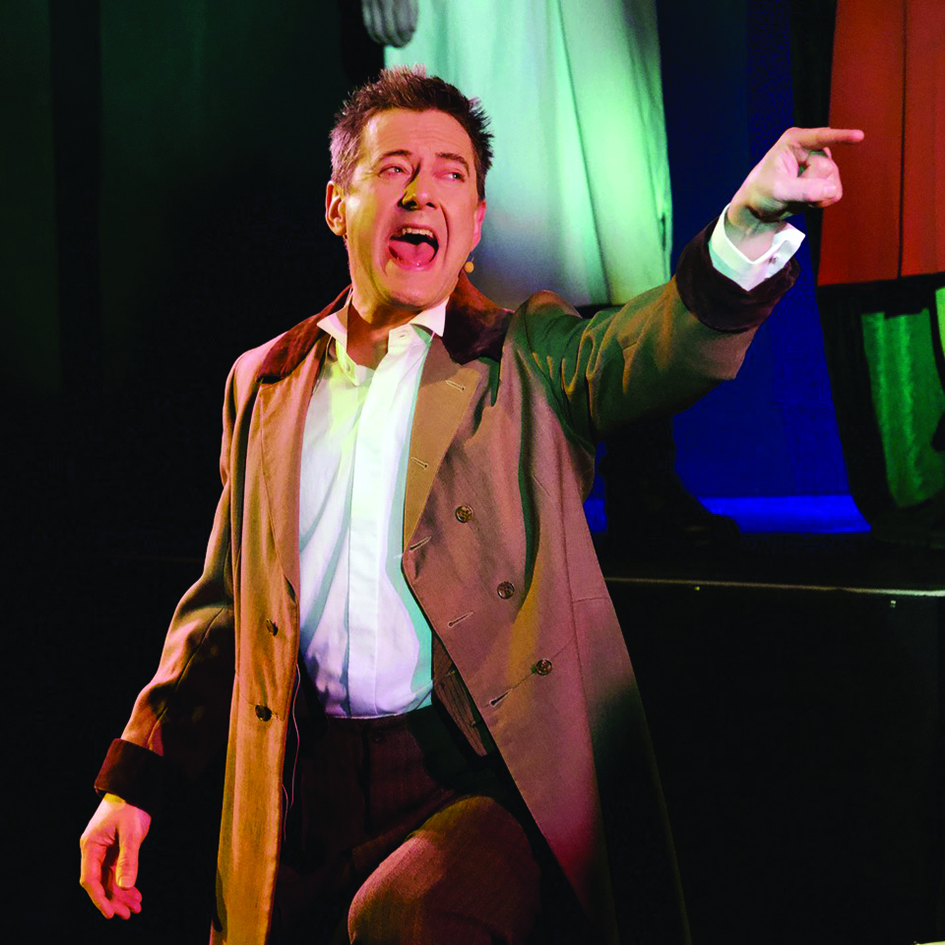
For the trial scenes, they are joined by Sharpe and Britney as counsel for the Plaintiff and Lincoln Temple (Libby Anderson) for the Defendant and, finally, the entourage from Paris. Despite cross examination by Temple of Défarce for war crimes, she is awarded the value of the estate which legal costs have reduced to nothing.
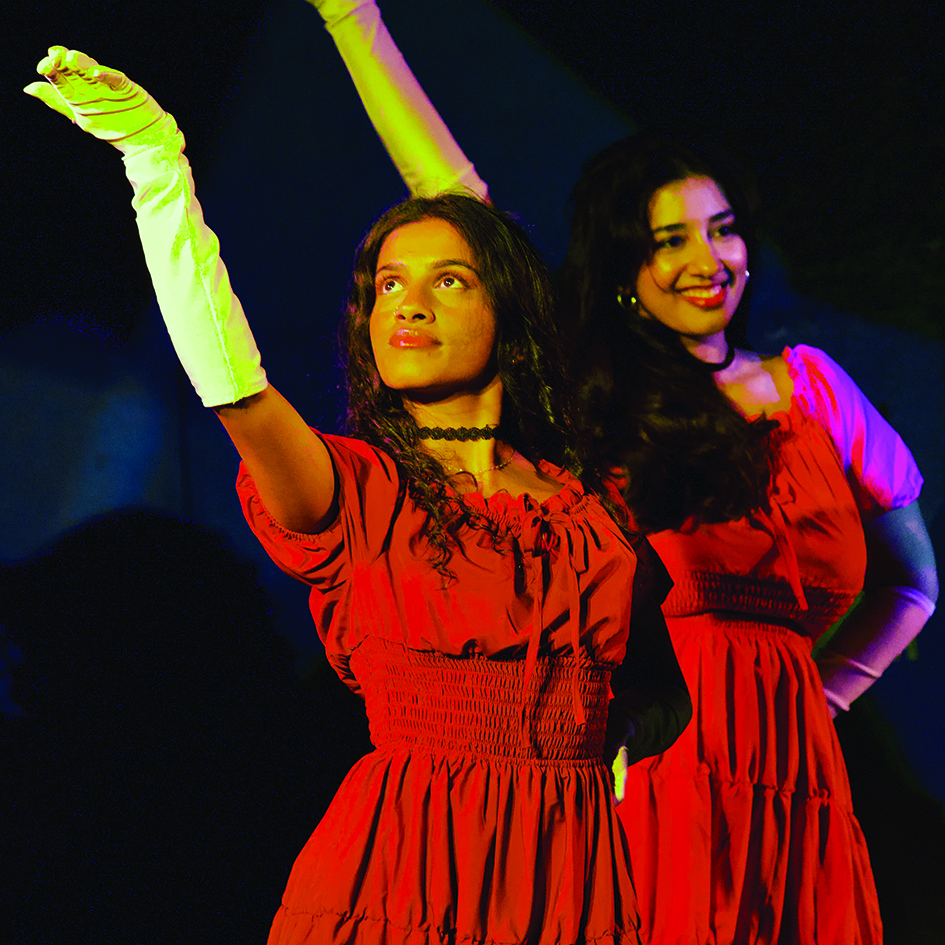
Britney and Archie are married. The wedding party is the cue for the inevitable dance routine to fizzing and accomplished choreography, this year by Kuzmenko and Amy Oliver to ‘Shut Up and Dance’ and a company 11 strong.
As the newlyweds reflect on their happiness, Gagwitch reappears, revealed as Britney’s father and Archie’s benefactor, and gives his blessing to the union. Less enthusiastic is Lady Lavisham whose ward Britney has been. As an embittered Lady Lavisham, Geraldine Andrews, dressed in Haversham-like wedding weeds and holding a bunch of roses, gives a most poignant performance of ‘Losing My Mind’ from Sondheim’s Follies before Toria Ellis, on Lavisham’s instruction, torches the place; she anticipates her task with the Clare Teal number ‘Messin’ With Fire’.
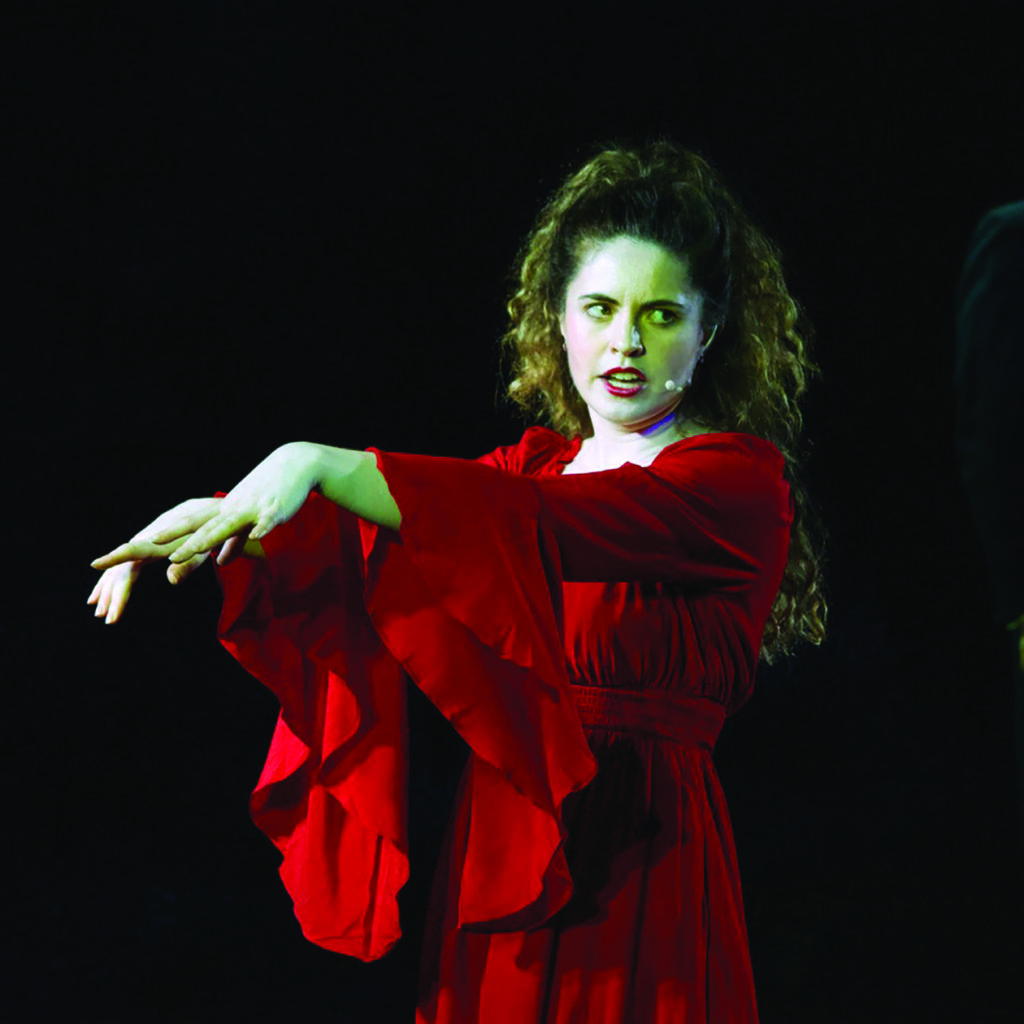
Time moves on. In Act Three, Archie (now George Penny) is widowed, in silk, with a distinguished career behind him (having solved The Mystery of Edwin Drood), crabby, querulous and living alone in Gray’s Inn one foggy Christmas Eve. He berates his clerk, Scratchit (Gwynfor Evans) for booking him to appear in court in Milton Keynes on Boxing Day. His loathing of parties (‘I’d rather rip out my eyes with a blunt quill’) and grumpiness is confronted by the arrival of high kicking carol singers (Lameesa Iqbal, Harriet Palfreman, Áine Tyrrell and Samara Brackley) and a tingling ‘Jingle Bell Rock’ augmented by the full company of the Songbirds in a performance applauded to the rafters.
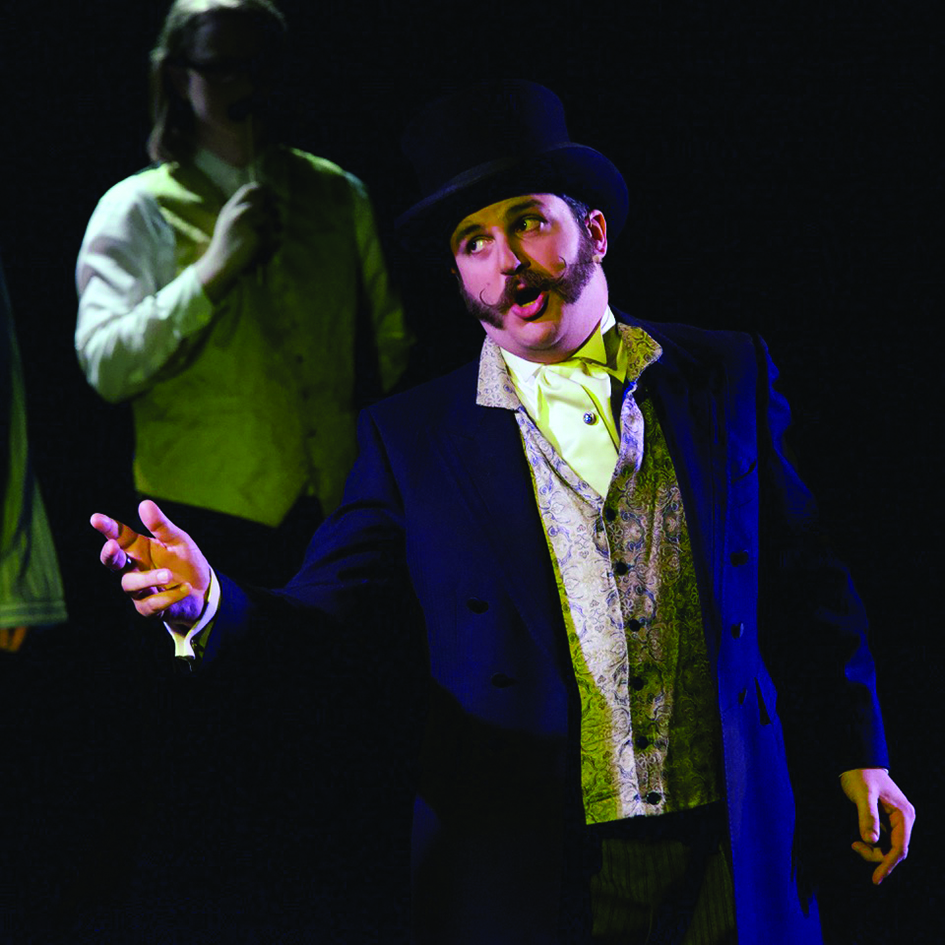
Archie is visited by the ghost of Christmas Past (Elle Curzon) and confronted by his past including the younger Archie (version Cole), and his suitress, Belle (Chantelle Staynings) whose attempts to secure a proposal are thwarted. Belle’s anguish is portrayed in song with a heart‑wrenching and towering performance of ‘My Days’ from The Notebook.
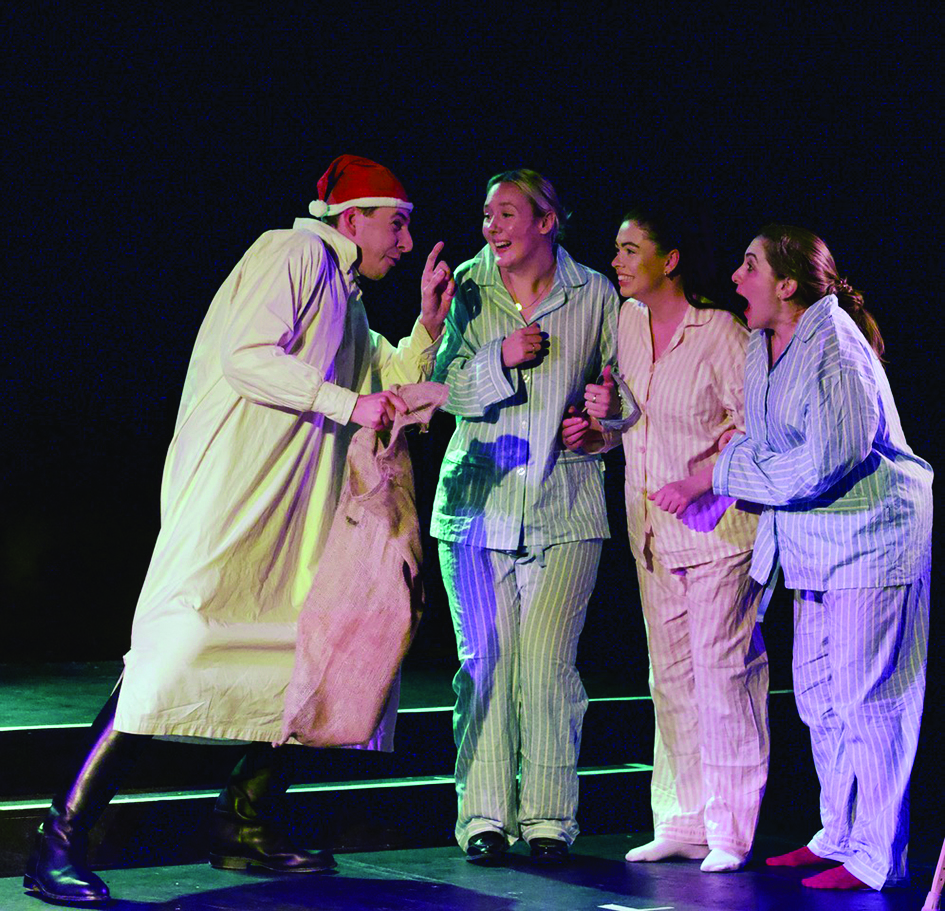
Crumb (Boris Scratchit) and Áine Terrell (Maurice Scratchit)
The Ghost of Christmas Present (Suding) serenades Archie with ‘Pure Imagination’ from Willy Wonka and the Chocolate Factory and confronts him with the impoverished Scratchit family Christmas. Gathered round the tree (Lucinda Orr), the children (Harriet Palfreman, Áine Tyrrell and Pearl Crumb, with Liam Chin as Tiny Tim) receive their modest presents before a tear‑jerking duet of ‘Suddenly Scratchit’, parodying ‘Suddenly Seymour’ from Little Shop of Horrors, by Gwynfor Evans and Lara White (as Mrs Scratchit) with virtuosic harmonies.
The ghost of Christmas Present conjures up other contemporary titans: Florence Nightingale (Lucinda Orr), the Brontë Sisters (Lameesa Iqbal as Anne, Alice Kuzmenko as Charlotte and Amy Oliver as a high maintenance and histrionic Emily), Joseph Bazalgette (Zander Goss) and Isambard Kingdom Brunel (Stephen Hill). Oliver’s Kate Bush doppelganger performance of ‘Wuthering Heights’ is a highly charged balletic tour de force bestriding the stage before Bazalgette trades achievements with Brunel and gives him advice for pulling a girl with ‘If You’ve Only Got a Moustache’, from A Million Ways to Die in the West.
The ghost of Christmas Yet-to-Come (Elle Curzon) invokes the funerals of Archie and Tiny Tim. It is the latter’s death which melts Archie who morphs into Father Christmas and gives Scratchit the morning off before departing to visit his estranged celebrity hairdresser son.
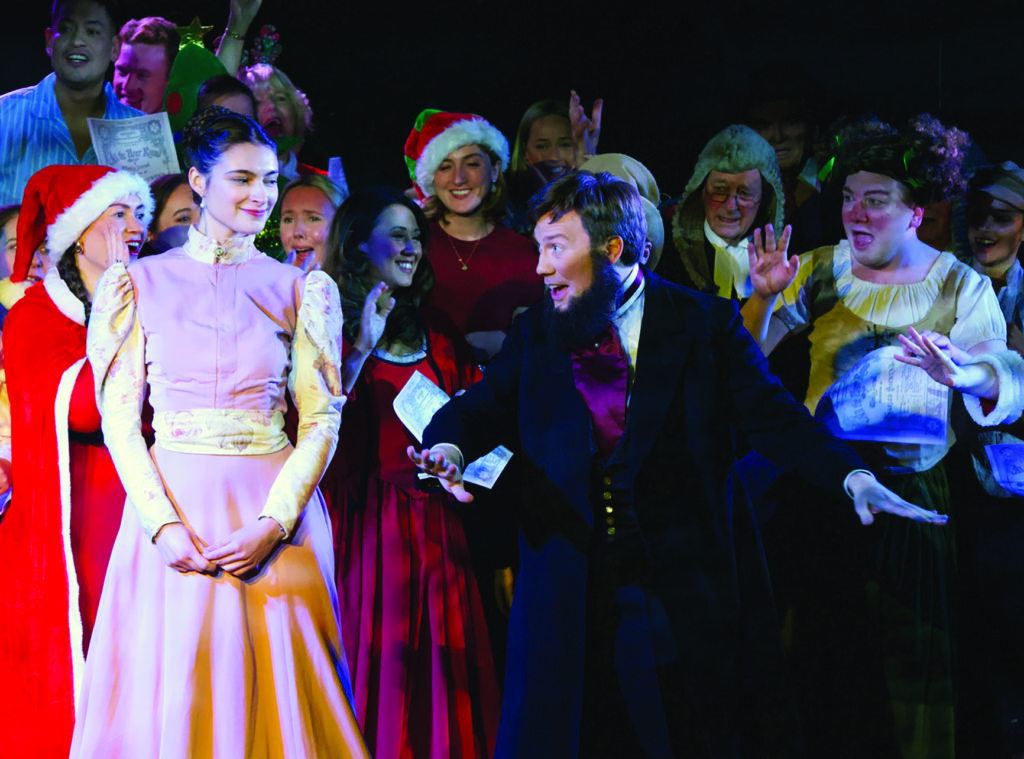
The closing number, ‘My Favourite Character’, written and composed by Harry Samuels, had the entire company debating which of the glorious range of characters in the production had been their favourite. That was an invidious task indeed: such had been the excellent quality of exuberant talent. The description by the Treasurer in her closing remarks, of this being a ‘Vintage Miscellany’ was an understatement. It takes its place with the best with standards of storytelling, production and performance which seem to edge higher every year and gives voice and song to the collegiality of the Inn in a way that is not matched by anything else in the calendar. If Dickens himself had been in the audience, his opinion of Gray’s Inn would surely have been turned on its head.
Explore more from this edition
Treasurer’s Amity Visit to Singapore and Malaysia 2025
Our enduring bond with Singapore and Malaysia unfolds through training, diplomacy and friendship, culminating in the Inn’s amity visit in September 2025.
Interrogatories Answered by the Treasurer
From theatre dreams to family justice, our 2026 Treasurer, Master Andrew McFarlane, reflects on vocation, public duty and life beyond the law in a candid interview.
Popular Myths at Gray’s Inn: The Night of Errors Part 2
Master Timothy Shuttleworth challenges the belief that The Comedy of Errors was first staged against the Hall screen, arguing – using Gesta Grayorum and later research – that the performance likely took place near the dais.
Lord Edmund Davies Legal Education Trust
Ten Welsh students spend a week at Gray’s Inn through the Lord Edmund Davies Trust, gaining rare insight into legal London through shadowing, marshalling, mooting and talks honouring Edmund Davies’s legacy.