Interrogatories Answered by the Treasurer
Number 46, Spring 2026
Master Heather Williams
1. What made you decide to become a barrister and did you consider any other career?
It was a choice that, in a way, made itself. At school there was something called ‘The Challenge of Industry’, aimed at encouraging interest in a career in business. I am afraid that, for me, it had the opposite effect. When, miraculously, I started my time as a Law undergraduate at Durham University, I decided to join Gray’s and with fellow student Master John Steel, I came up to London a number of times to ‘keep terms’ by dining the requisite number of dinners. During the vacations I had spent time in two or three solicitors’ offices. With no disrespect intended to our sister profession, I have to say that these visits confirmed my intention that, if I was going to practise law, advocacy was my goal.
I gave very serious consideration to making a go of it as an actor or a journalist. Most of my time at university was spent acting, singing, dancing (yes!) and directing in plays, light opera and revue. It would, I now see, have been a foolish endeavour, but at the time I was seriously tempted. One of my fellow revue chums at Durham went into the church and eventually became Bishop of Worcester (the Rt Revd Dr John Inge). He is wont to observe that he and I both pursued careers, as a substitute for the theatrical life, that have involved a lot of dressing up and performing. Dr Inge is to give the Mulligan Sermon this year on 17 May. Looking backwards, and now knowing much more about myself than I did in my 20s, I think that I might well have been able to pursue a career in medicine or psychiatry. This idea would have seemed laughable to my teenage self, and to my science teachers, but, as the years have gone by I have thought more and more that it would have been possible. For over 40 years now I have had to understand and work with very detailed medical evidence connected with allegations of child abuse. The human body and mind are fascinating. At Durham, we had to take a non‑legal module as an adjunct to our course and I chose psychology. I was a Samaritan in Birmingham and later took an intensive course in counselling skills in the hope that it might assist my approach to those clients who seemed so hard to engage. As a Family judge, the need to know why people behave as they do, and what may be done to support them to behave in a safer way going forward, is often at the forefront of the risk assessment that is stuff of decisions about a child’s future welfare.
Finally, and separately, on the topic of careers, I did, and have always felt, a call to consider ordination. This was strong at Durham, which is an internationally renowned centre for Christian learning, and this call has ebbed and flowed in strength throughout my life. It is now too late, but in the coming years I hope to renew and increase the connection.
2. How did you come to choose Gray’s Inn?
I was introduced to Gray’s by my school. I was warmly welcomed by the then Under Treasurer Oswald Terry and I never even considered looking at any other Inn. All readers of this article will agree with me that I made the correct choice, and that there would have been nothing to be gained by any further research!
Being serious, Gray’s delivered on that early promise of welcome and support. My father had died when I was 15 and my mother suffered a life-changing stroke during my Bar year. I was an only child and there was no family money available. In 1977 the idea of pupils being funded by chambers was not in anyone’s mind: it was only shortly after the time when the pupils had to pay the pupil supervisor a fee for taking them on. At that time the Inn had an interest-free loan scheme for the young Bar. Without the substantial loan that Gray’s afforded me, I do not think that I could have gone on to practise at the Bar. It is as simple as that and for that support I have always been, and remain, so grateful to the Inn.
3. You became a Family Lawyer specialising in children cases; how did that happen?
More by chance rather than design. I was in a common law set, 2 Fountain Court in Birmingham. I was not drawn to the Family work, but had no knowledge of the public law (child protection) part of the jurisdiction. One morning, the clerks asked me to go to Nottingham for 2pm for an urgent wardship hearing. My clients’ three children had been removed, without notice, by social workers the previous evening and the case was up for a first hearing before a Registrar (now District Judge). With no knowledge of the law, and no time to gain any, I headed up to Nottingham with a strong feeling that the social services must have acted unlawfully, the children should be returned to the parents immediately and not removed again until there had been a full hearing in due course. I advised my distraught clients accordingly in the short conference that took place before we were ushered in to see the judge. My own shock at discovering that my gut feeling that this was all wrong was itself wrong was even more profound than that of the two parents. Of course, those reading this piece, and I, can now see how very naïve I was, but it was a genuine revelation that the State had such power and that this was all in accordance with the law. I was immediately intrigued to understand just what this law was, what were the checks and balances, what was the due process and, fascinatingly, what factual situations there might be which could justify this degree of intervention into family life.
Separately, around this time, I began being instructed in contested adoption cases for Birmingham City Council. Again, I was struck by the draconian nature of the court’s powers. By adoption a child is regarded, as a matter of law, as if they had been born to the adopters and not to any other person. It fundamentally shifts the tectonic plates of a child and future adult’s identity, and does so for life. I was intrigued to understand just what the underlying legal basis was for this jurisdiction and, separately, what degree of human behavioural dysfunction needs to have taken place to justify making such an order. This was all more than a decade before the Human Rights Act 1998, and at a time when child care law was in its infancy and our understanding of child abuse was developing from a fairly rudimentary level.
There was at that time no narrative, detailed textbook aimed at the growing number of solicitors, barristers and judiciary involved in this work. David Hershman and I decided to write a small book on the subject. Coincidentally, and through no planning on our part, Parliament was in the process of enacting the Children Act 1989. Our book was published on 14 October 1991, which was the day that the new Act came into force. We publish updates to the text three times each year, and are now onto Update 104. Tragically David died in 2004. I continue to edit the updates together with HH Judge Madeleine Reardon and Alex Laing.
4. What do you find most rewarding about being a judge?
Most Family cases involve the court taking a difficult situation and aiming to resolve it in a way which is safer or otherwise for the members of that family. This is a positive goal to have, and the courts have wide and very flexible powers to change the living arrangements and/or family finances in order to achieve this. The two questions for a judge in any Family case boil down to: ‘what on earth has gone on here?’ and ‘what on earth are we going to do about it?’.
There are, of course, no overtly ‘right’ or ‘wrong’ outcomes and, crucially, judges seldom get to know how things actually work out, but I think that the essential judicial task of a Family judge is both interesting and rewarding for that reason.
5. What are your priorities for your year as Treasurer?
I had not thought that I would need any priorities and I certainly do not have any specific goals for my time. The Inn is run by its members, through committees and Pension, with our decisions being implemented by the excellent staff team led by the Under Treasurer. It is a collective endeavour and not dictated from the top.
I see my year as an opportunity to give back to the Inn, in small part, for all that I have received from my earliest years and since. My aim is to do the best that I can with respect to the students, by choosing speakers who are of the highest quality, by supporting the Education Department as much as I can, and by taking time to get to know as many of our young protégés as I can.
6. What has life on the Bench taught you?
There are many answers that I can give to this question. Life on the Bench has been a multi-faceted and very rich experience. Here are a few bullet points:
- You learn more by listening than by talking.
- Don’t judge a book (that is a person) by the cover.
- First impressions are not always, or often, sound.
- My clerk at the Bar used to put ‘PD’ in the handwritten diary for members of chambers sitting as a fee-
paid judge. ‘PD’ stood for ‘public duty’. There is a high degree of public duty displayed by all in the
Family Court, be they staff, magistrates, judges, lawyers, social workers or others. No one is doing
what they do for the money and their commitment to the delivery of justice is admirable. - After 15 years as a member of the Court of Appeal, I have seen a good slice of the practising Bar across
the full spectrum of non-criminal work. Professional standards are impressive across the board, and the
degree to which the Bench can rely upon the integrity of counsel remains high.
7. What are your other main interests outside of the law?
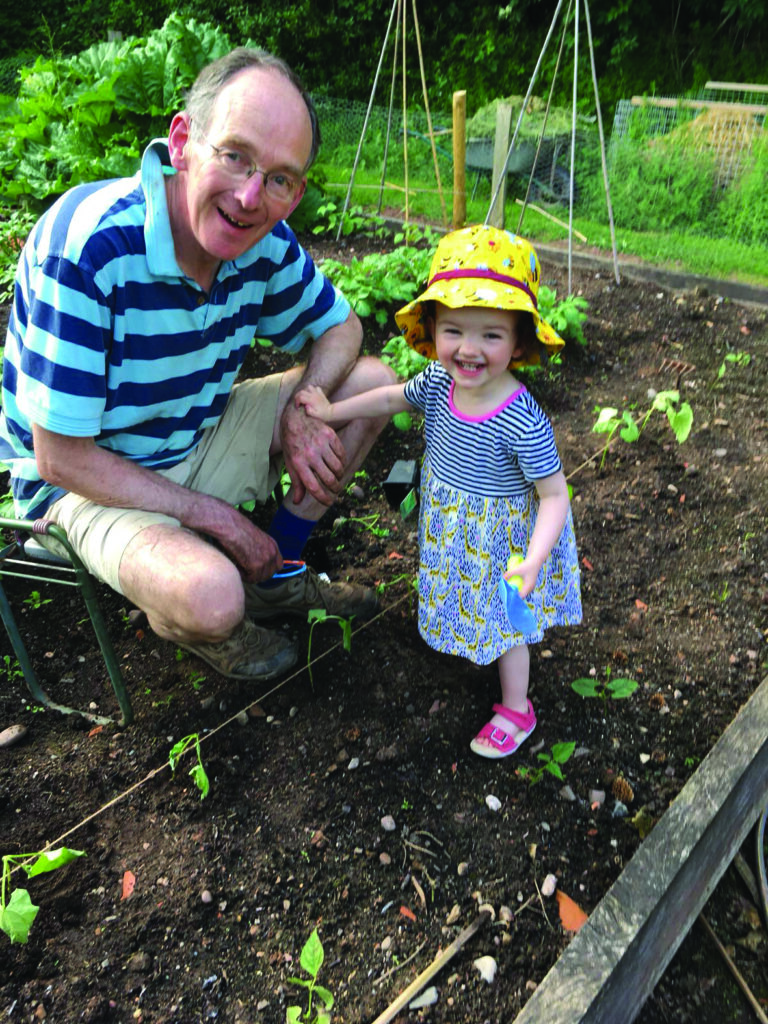
We live in Herefordshire and for over 30 years I have been based in London or working in courts all around the country. The norm of our family life is for me to leave home on Monday morning and return on Friday evening. My main interest outside the law has simply to be at home with Susanna and enjoying family life together. My time is spent pottering around and cultivating the vegetable garden. Some time ago, I got to know the then Chief Constable of West Mercia. He, too, was a keen vegetable gardener and his wife reckoned that he was so keen on his plot because it was the one aspect of his life when he could plan something, plant the seeds in carefully placed lines and watch the whole project come to fruition on time and in line. This was in total contrast to every other aspect of his professional life! I knew what she meant and, in these last years during which I have been President of the Family Division, her wise observation has often come back to me.
I have had a life-long interest in the theatre, sadly from the auditorium rather than treading the boards. I am also a failed amateur magician. In my teens conjuring was a very active hobby, but the busy-ness of practice and family life took over. In recent times I have tried to take up card magic again and to learn, for the first time, some of the more complicated sleights. This turns out to be very difficult, despite the high quality video tutorials that are now available (in contrast to the scratchy line-drawings of my youth). Unlike those of a young person, the fingers of a 70 year old are more like a bunch of courgettes rather than okra.
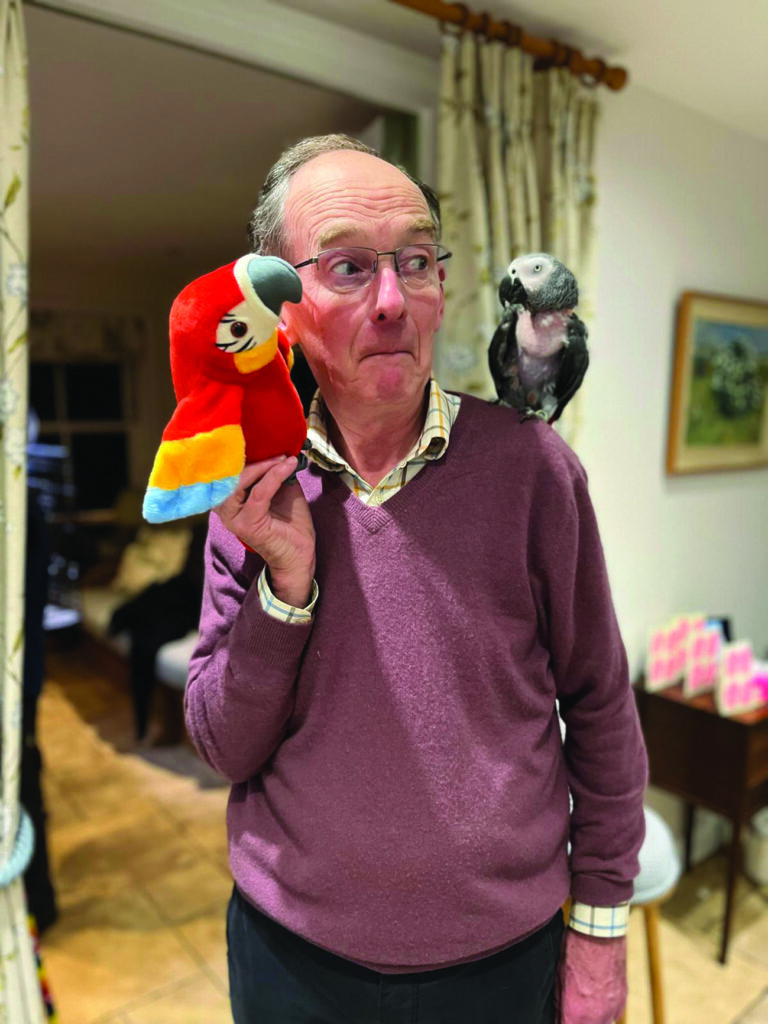
I should also mention that we have inherited a parrot, whose name is ‘Jester’! I am looking forward to spending more time with him too.
8. Which three persons from the past would you most like to bring to Guest Night?
Archbishop Thomas Cranmer: the Book of Common Prayer is a joy. He was an eye witness to one of the most interesting periods in our history. That such a fine and valuable human being could have been executed in such a foul way has always struck me as abhorrent.
Houdini: the great showman magician, whose ability to capture and captivate public attention with the most unbelievable stunts has never been surpassed.
Ada Lovelace, the very first pioneer of modern computing, who died age 36.
Explore more from this edition
Popular Myths at Gray’s Inn: The Night of Errors Part 2
Master Timothy Shuttleworth challenges the belief that The Comedy of Errors was first staged against the Hall screen, arguing – using Gesta Grayorum and later research – that the performance likely took place near the dais.
Lord Edmund Davies Legal Education Trust
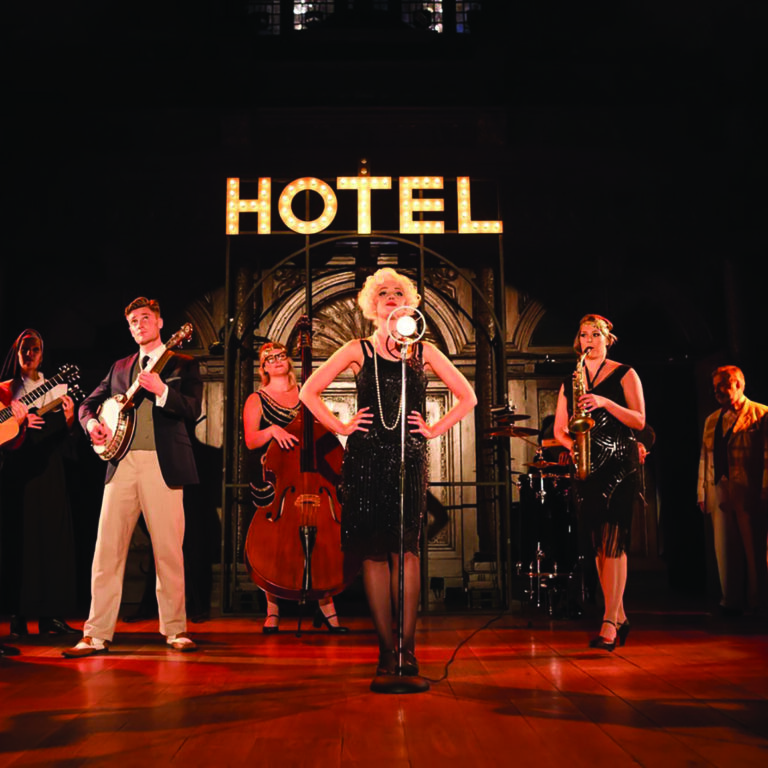
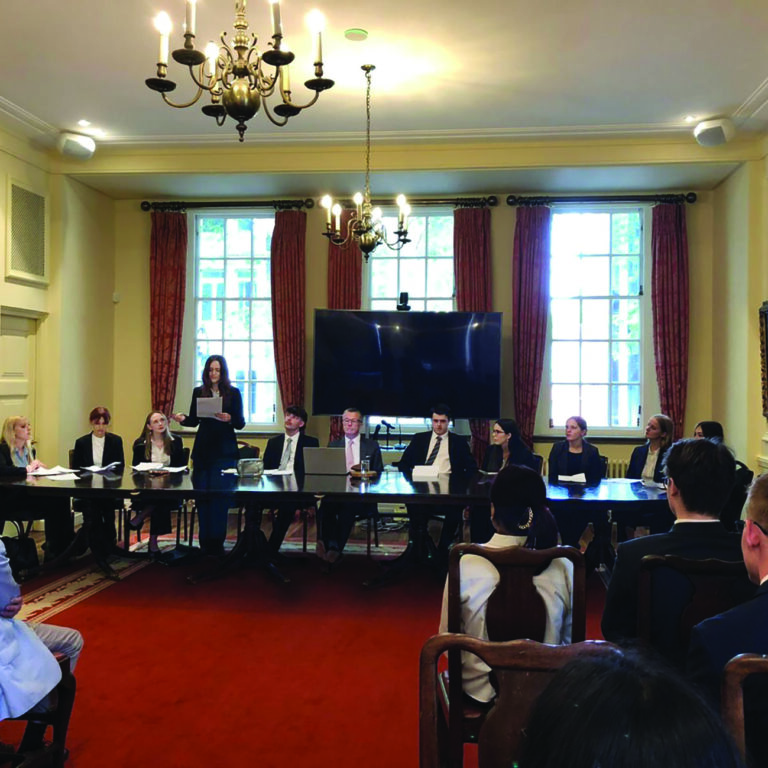
Ten Welsh students spend a week at Gray’s Inn through the Lord Edmund Davies Trust, gaining rare insight into legal London through shadowing, marshalling, mooting and talks honouring Edmund Davies’s legacy.
Betty Archdale: A Gray’s Inn Pioneer
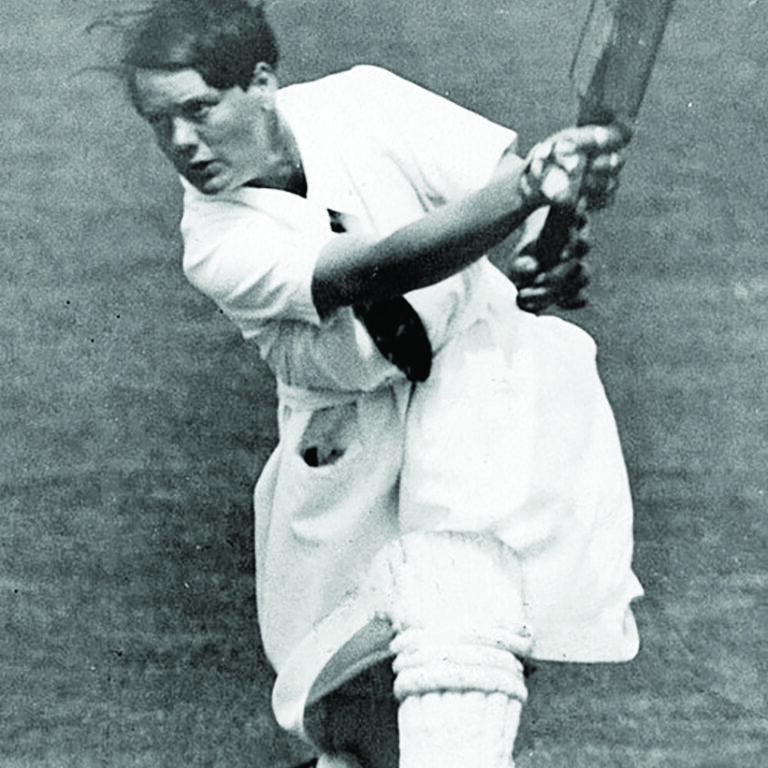
A trailblazing cricketer, barrister and equality advocate, Betty Archdale’s career spanned sport, law, wartime service and education – an extraordinary life of determination and public duty explored in Master Christopher Butcher’s article.
Griffins in the Inn
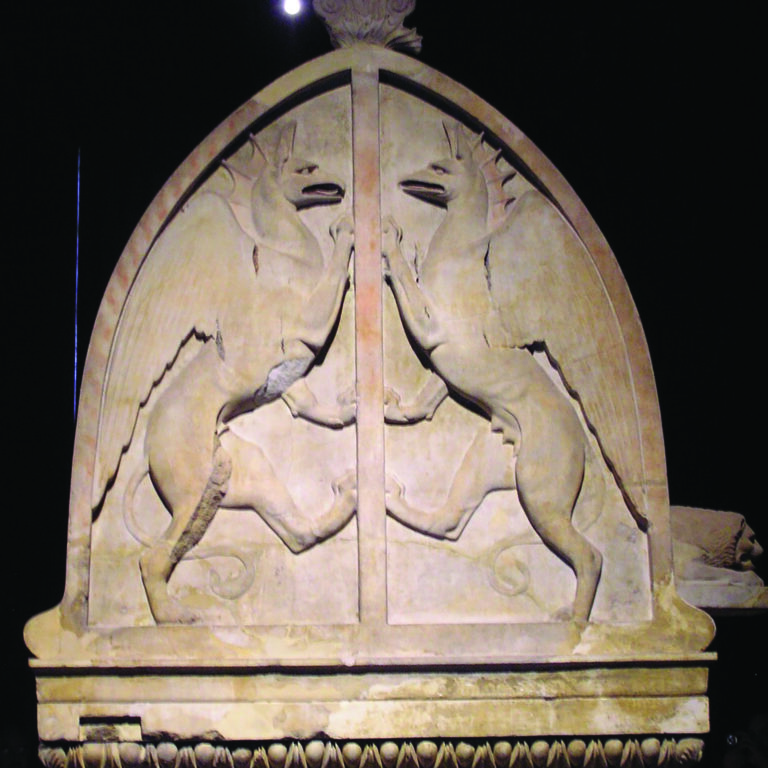
Griffins adopted around 1590 with debated origins, possibly replacing Thomas Grey’s arms; the mythic eagle‑lion symbol embodies vigilance and courage, becoming a fitting guardian of Gray’s Inn identity.