
Betty Archdale: A Gray’s Inn Pioneer
Number 46, Spring 2026
Master Christopher Butcher
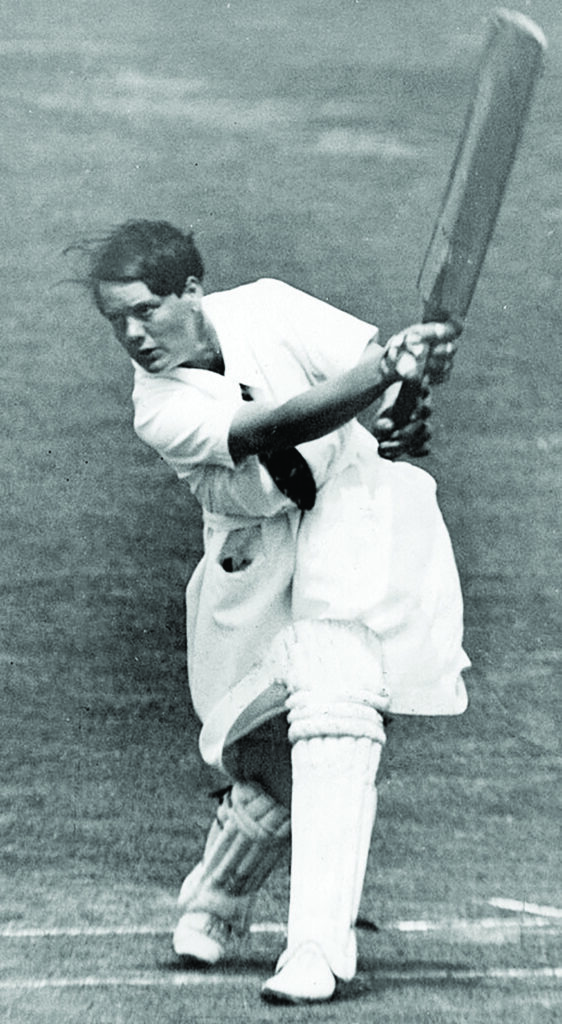
For those who are suffering from dismay following the English men’s test cricket drubbing in Australia, a tonic may be to reflect on the truly remarkable career and achievements of a former member of Gray’s Inn, Betty Archdale.
Archdale was the daughter of Helen Alexander Archdale (née Russel) a prominent Scottish feminist and journalist. Helen took part, for example, in the Scottish suffrage demonstration on 9 October 1909. Shortly afterwards, she, with others, disrupted a meeting addressed by Winston Churchill, was imprisoned for breach of the peace, and only released after commencing a hunger strike. In 1910 she became an organizer of the Women’s Social and Political Union (‘WSPU’), and in December 1911 received a two-months’ sentence of imprisonment for smashing windows. She worked in various capacities for the WSPU’s papers The Sufragette and Britannia; and formed a close relationship with another leading feminist, Margaret, Viscountess Rhondda.
Helen Archdale had married Captain Theodore Montgomery Archdale in 1901, an Irish officer in the Royal Horse Artillery, and their daughter Helen Elizabeth (Betty) was born on 21 August 1907. One of her godmothers was Emmeline Pankhurst. Amongst Betty Archdale’s earliest memories were collecting stones in their garden for use in breaking windows in a suffragist demonstration, and visiting her mother in Holloway prison. Betty Archdale’s education was radical by the standards of the time. She attended the avant-garde co-educational school at Bedales, where she first played cricket, and then St Leonard’s School, St Andrews, which her mother (and Lady Rhondda) had also attended, where cricket was played. After school, she was a student at McGill University in Canada between 1926 and 1929, obtaining a first class degree in economics and political science. After returning to England, she studied for an LLM at London University, specialising in International Law, and became a member of the Inn in April 1934.
During this period, she acted as secretary to the Six Point Group, an organization founded by Lady Rhondda which aimed to secure full social, economic and legal equality for women through legislative reform. She became a socialist, and made a trip to Russia in 1932; also acting, at times, as the secretary of Ellen Wilkinson, the left-wing Labour MP for Middlesbrough East from 1924. In June 1933 she was a part of a delegation which lobbied the Lord Chancellor, Lord Sankey, regarding the nationality of married women, and advocated for women’s right to independent nationality. The British Nationality and Status of Aliens Act 1933 did not, in the event, grant full equality to women, but included a safeguard against statelessness, namely that a British woman would not lose her British nationality upon marrying a foreign man unless she acquired her husband’s nationality; and also provided that if an alien was a subject of a state at war with the United Kingdom, his wife, if she was at birth a British subject, could declare that she desired to resume British nationality, allowing the Secretary of State to grant her a certificate of naturalization.
Also during this period, the tall and athletic Betty Archdale, as well as playing in goal for Kent at hockey, became a leading figure in women’s cricket, again playing mostly in and for Kent. She was chosen to captain the first ever England Women’s team to tour Australia for the inaugural test series between the two countries in 1934/5. In the first test at Brisbane, she made 32 not out in England’s first innings, and England won the match by 9 wickets. In the next test, at Sidney, she made only 3, but England’s first innings total of 301 for 5 (declared) saw England to a victory by 8 wickets. In the third and final test at Melbourne, Betty Archdale scored 32 and 10, but the three-day match was drawn. Wisden Australia commented that ‘her forthright yet engaging personality made her a popular figure to whom the sizable Australian crowds responded warmly.’Betty Archdale then captained England in a one-sided test match in New Zealand, played at Christchurch, which England won by an innings and 337 runs. On the tour as a whole, the team had played 21 matches, had lost none, and won 16. The Daily Mail recorded Betty Archdale as saying, on the team’s return, ‘Of course, we had to put up with a good deal of barracking, but it was all very good-natured’. The victorious return, and Betty Archdale’s role, were noted in Graya No. 16 (Easter 1935).
After that return, Betty Archdale applied herself to activities of the Six Points Group, of which she became Chairman, and to qualifying for the Bar. In 1936, she was one of the signatories of a letter to The Times drawing the attention of the public to, and welcoming, a Bill coming before the Indian Legislative Assembly, which provided that no Hindu woman should, on account of her sex, be excluded from the right to inherit or own property. On 7 June 1937, she appeared as senior appellant in a Moot at the Inn, presided over by Master R.E. Dummett, on an issue, reflecting her interests, of whether there could be extradition under the Anglo-Portuguese Extradition Treaty. She was called to the Bar by the Inn. Also in June 1937 she, as chairman of the Six Points Group, wrote to Éamon de Valera, at that point head of government in Ireland, asking about the status of women under the proposed new constitution for Eire. Her letter outlined the group’s concerns that certain articles of the constitution would allow for discrimination against women, and were ‘based on a fascist and slave conception of women’, emphasizing the role which women had played in the struggle for Irish freedom.
In July of the same year, as if her activities in June had not been enough, Betty Archdale played in the third and final test match against Australia at the Oval. Doubtless she had not been able to play in the earlier two matches (one of which was won by England and the other by Australia) because of her legal preoccupations. She scored 29 in England’s first innings total of 308 for 9 (declared), but the match was drawn. We see Betty Archdale mooting in the Inn during May 1938, on the issue of the construction of a will. Counsel were complemented by the President (Morton J) upon ‘their most learned arguments and judicious selection of cases’. She was also clearly actively pursuing her legal career, but this did not prevent her, even though playing relatively little cricket, from being selected to captain the English women’s side which was to have toured Australia in the winter of 1939/40. She participated in two dress rehearsals for the tour, one a match between North and Midland and South and East, in which she captained South, and another at the Oval in July 1939.
With the outbreak of the war, however, the tour was cancelled. Betty Archdale volunteered for the Women’s Royal Naval Service (‘WRNS’) to be a wireless operator. In 1941 she was promoted to the rank of Second Officer and in the summer of that year was posted to Singapore, and was still there at the beginning of February 1942, when the Daily Mail reported that she and 30 ‘Wrens’ were ‘almost the only English women now left there’, maintaining telegraph touch with the world. She was, however, able to escape just before Singapore fell to the Japanese. In the New Year’s Honours for 1944 she was awarded the MBE, and later that year was promoted to the rank of Acting First Officer. During the war she had also been posted to Colombo, Sri Lanka, to Kenya and to the Persian Gulf. Just as the war was ending she was sent to Australia, and she decided to stay there. In 1946 she was appointed Principal of the Women’s College of the University of Sidney, founded in 1892. She remained Principal until 1957 when, seeing it as having even greater potential for her to advance women’s education, she became headmistress of Abbotsleigh School for Girls in Wahroonga, NSW. There she modified the curriculum to include a greater emphasis on physics, sex education, debating and Australian (as opposed to British) history. She retired in 1970.
She remained associated with the University of Sydney and was elected to its Senate in 1959. She founded the Australian branch of the International Law Association in 1958, and chaired the NSW Branch of the Australian Institute of International Affairs (1960–1962) and the Arts Council in NSW (1972–1974). In 1998 the Australian National Trust voted her one of Australia’s hundred living ‘national treasures’. In 1999 the MCC elected her as one of the first ten women honorary life members of the Club. She died on 11 January 2000, aged 92, after a life both pioneering and remarkable. The whole Gray’s community can be proud of her association with the Inn.
Explore more from this edition
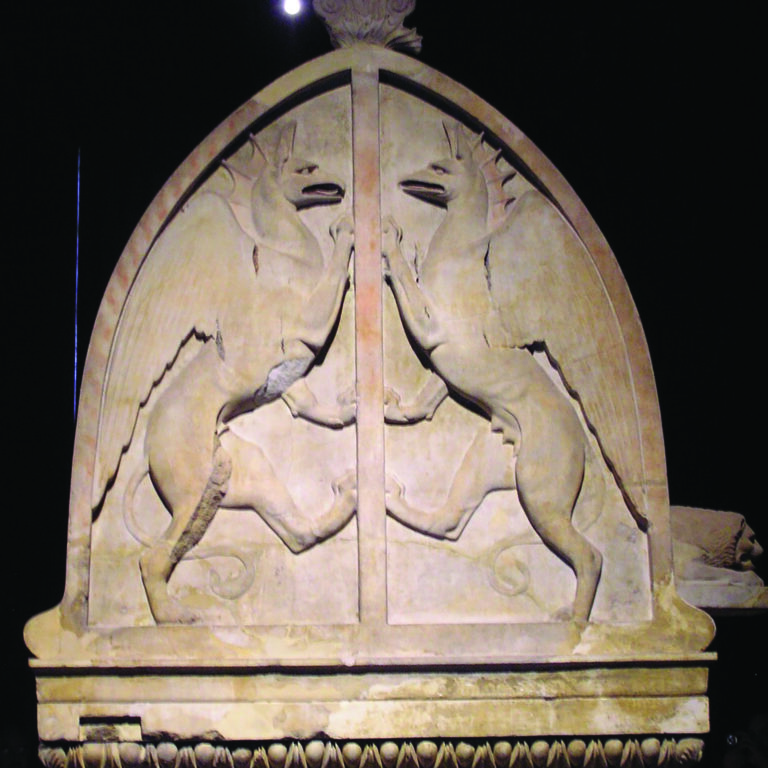
Griffins in the Inn
Griffins adopted around 1590 with debated origins, possibly replacing Thomas Grey’s arms; the mythic eagle‑lion symbol embodies vigilance and courage, becoming a fitting guardian of Gray’s Inn identity.
The Employed Bar: Many Paths, One Profession
A panel highlighted the Employed Bar’s diverse careers, showing how practitioners across government, private practice and the armed forces find intellectual challenge, purpose and impact in flexible, service‑driven employed practice.
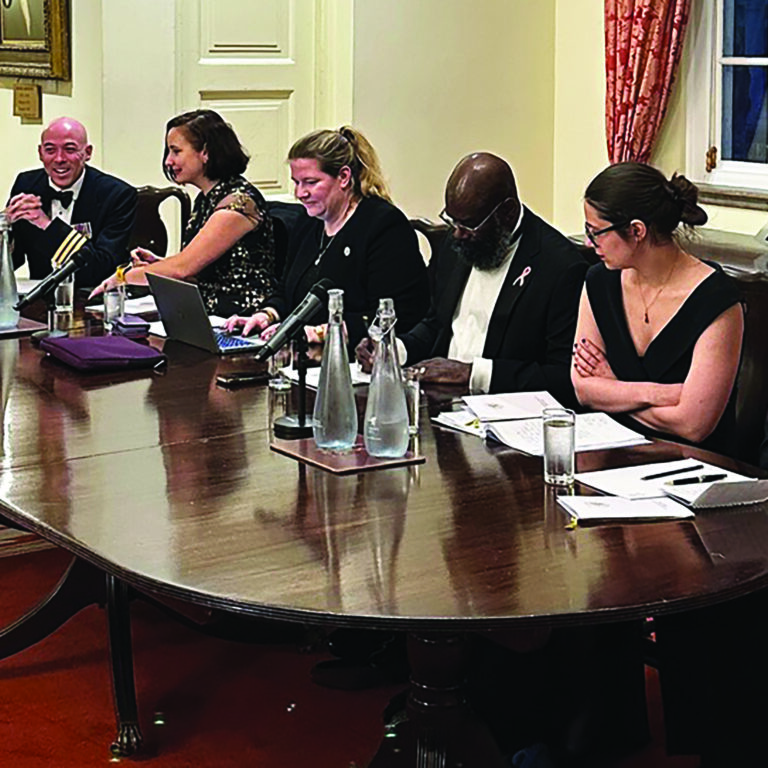
A conversation with Master Harry Carter
Master Harry Carter reflects on a public‑service career spanning EU law, the Home Office and No.10, sharing key moments, Prime Ministerial insights and his commitment to improving legislation as a crossbench peer.

Is it Time for an Ethical Reset in the Legal Profession?
Professor Richard Moorhead highlighted cultural and ethical failings in the profession, with panelists stressing competence over rule changes and warning that restoring weakened professional integrity is far harder than protecting it.