The Employed Bar: Many Paths, One Profession
Number 46, Spring 2026
Pheobe Whitlock
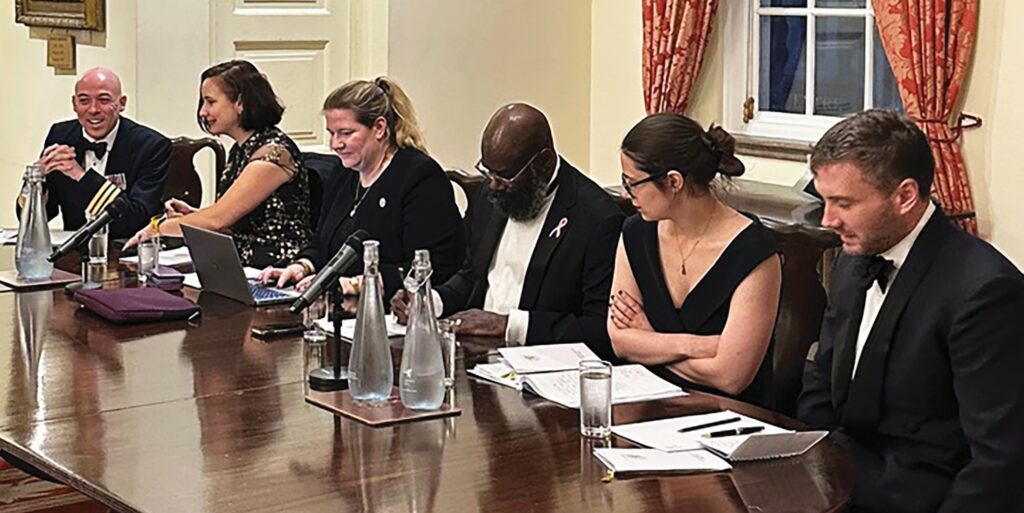
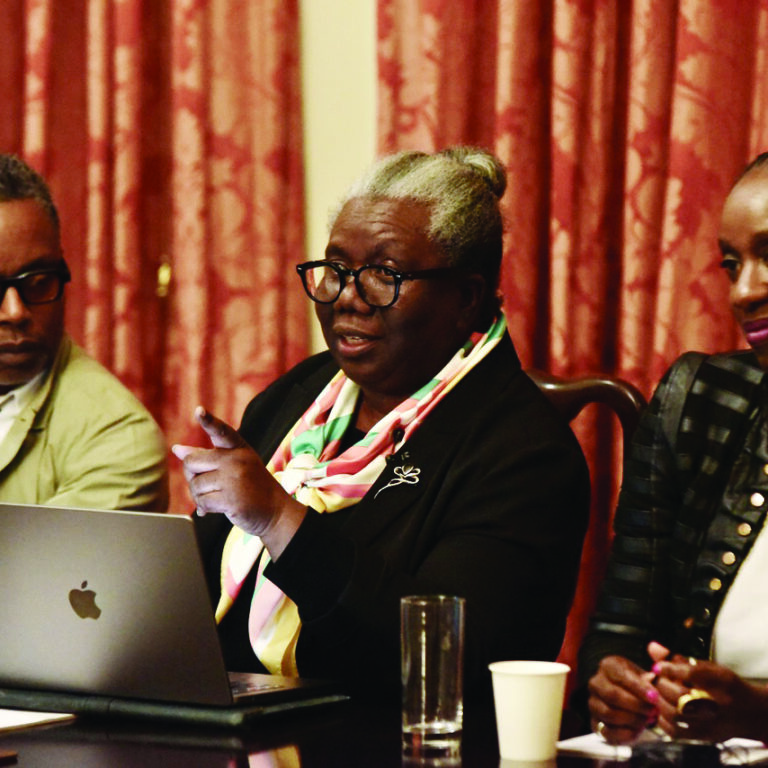
The diverse nature of legal practice was on full display at the Inn on 23 October 2025, when a panel of senior practitioners gathered to discuss life at the Employed Bar. Drawing on experiences from government and private practice, domestic and international, the discussion offered a candid and often refreshing portrait of careers that sit outside the traditional self‑employed model of the bar, which we all know so well.
Chaired as an open and practical conversation, the Panel brought together a diverse group of speakers: Master Lucinda Orr, Partner at Enyo Law and Treasurer of the Bar Council; Timothy Manley, Assistant Legal Adviser at the Foreign, Commonwealth and Development Office; Simon Regis CBE, Deputy Director at the Government Legal Department; Birgitte Hagem, a senior prosecutor at the Crown Prosecution Service; Julija Stukalina, Senior Associate at Nautica Law; and Commander John‑Paul Fitzgibbon of the Royal Navy.
Despite their varied backgrounds, a consistent theme emerged: few had planned a career at the Employed Bar, but many had found it offered precisely the combination of intellectual challenge, public service and work life balance they wanted.
Commander Fitzgibbon, who joined the Royal Navy as a warfare officer before qualifying as a barrister, spoke of a career unlike any other. His work involves advising on the legality of military operations, weapons systems and the law of armed conflict. He notes that ‘no two days are the same’, describing the challenge of providing clear legal advice in high‑pressure operational contexts. He also stressed the importance of professional independence, particularly where the employer is also the client.
For Birgitte Hagem, a career at the CPS offered both variety and purpose. Starting as a junior prosecutor, she quickly gained courtroom experience before moving into specialist work in organised crime and counterterrorism. She described the CPS as supportive, inclusive and well‑suited to those with caring responsibilities, and although not as well paid as private practice, she felt the sense of public service more than compensated for the trade‑offs.
Master Orr’s route was less linear. After pupillage in a shipping set and a stint in US law firms, she found her way into employed practice almost by accident. What she discovered, however, was a professional environment that offered teamwork, intellectual depth and strategic responsibility. Now a partner at Enyo Law, she reflected on how career satisfaction evolves: early practice is detail‑heavy, mid‑career work is about managing people and problems, and senior roles increasingly involve Leadership and business development. Her advice was simple: stay open‑minded and reassess what success looks like at different stages.
Timothy Manley echoed that sentiment. Now working in the FCDO on human rights and international law, he described falling into government work and staying because of the responsibility and impact. From early appearances in the Court of Appeal to advising ministers on international negotiations, his career demonstrated the breadth of opportunity available within the public sector.
Simon Regis CBE, who has spent over two decades in government legal service, reflected on a career shaped by public impact rather than private gain. From confiscation work to advising on major public inquiries, he emphasised the privilege of shaping law and policy that directly affects people’s lives. Government work can be intense, but he explained that it also offers a sense of purpose and visibility that few other roles can match.
Across the discussion, several shared themes emerged. One was flexibility: the modern Bar is far more permeable than it once was, with movement between self‑employed and employed practice increasingly common. Another was realism: careers rarely follow a straight line, and success often comes from seizing unexpected opportunities. Mentorship, resilience and a willingness to ‘fail forwards’ were repeatedly emphasised.
The panel also dispelled myths. Advocacy, for example, is not confined to the self‑employed Bar; employed practitioners appear in court, advise on high‑stakes litigation, and shape legal outcomes in different but equally significant ways.
As the discussion closed, one message stood out: the Employed Bar is not a consolation prize or a deviation from the standard path anymore. For those willing to look beyond traditional pathways, it offers not only meaningful work but a sustainable and rewarding legal career.
Explore more from this edition
A conversation with Master Harry Carter
Master Harry Carter reflects on a public‑service career spanning EU law, the Home Office and No.10, sharing key moments, Prime Ministerial insights and his commitment to improving legislation as a crossbench peer.

Is it Time for an Ethical Reset in the Legal Profession?
Professor Richard Moorhead highlighted cultural and ethical failings in the profession, with panelists stressing competence over rule changes and warning that restoring weakened professional integrity is far harder than protecting it.

AGIS Report
The AGIS Report highlights a vibrant year of community and advocacy development, from festive gatherings and extensive mooting opportunities to the lively “Rite of Spring” Ball celebrating student achievement and connection at Gray’s Inn.

Black History Month Panel Event: Black Silk October 2025
Black History Month’s Black Silk at Gray’s Inn honoured Black excellence at the Bar, celebrating inspiring advocates and KCs whose journeys emphasised authenticity, persistence, progress and the power of community.