
History Society Lecture
Number 45, Autumn 2025
From Boris Johnson to Donald Trump: Do western democracies get the leaders they deserve?
“Who makes the fairest show means most deceit”
Cleon, Act 1, Scene 2: Pericles, Prince of Tyre – Shakespeare and Wilkins
Master Clive Osborne
In proposing the vote of thanks to Professor Patrick Diamond, the History Society lecturer at the March Guest Night, the Treasurer marked that it was usual for the excellent speakers chosen by Master Timothy Shuttleworth to reflect on the past, rather than the present or future, so he was to be congratulated on this time selecting a speaker more focused on the present. In fact, Tim told us that he first encountered him as the author of the programme note for a performance of Shakespeare’s Pericles at Stratford.
Patrick Diamond is Senior Lecturer in Public Policy at Queen Mary, London University. He holds the Gwilym Gibbon Fellowship at Nuffield College and is a Visiting Fellow at the Department of Politics in Oxford. Professor Diamond has worked as Director of the Labour Party Organisation and the magazine ‘Progress’. In 2000 he was appointed Special Adviser to Peter Mandelson, then Secretary of State for Northern Ireland. In the run-up to the 2005 general election, he was Special Adviser to Alan Milburn, leading on the management of the Labour Party Manifesto.
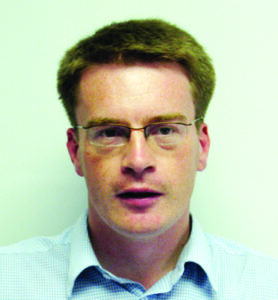
From 2001 to 2004 Patrick was a member of the No 10 Policy Unit with responsibility for the government’s public service reform agenda. So his experience both as an academic and working at a high level in government made him particularly qualified to address us on his chosen subject: ‘From Boris Johnson to Donald Trump: Do western democracies get the leaders they deserve?’ The line above from Pericles by Cleon, Governor of Tarsus, might apply to both Johnson and Trump, although Lord Sumption has also written that –
‘Trump’s trademarks are scapegoating, lies and personal abuse. The Mussolinian scowl says it all.’
Professor Diamond began by contrasting the styles of the two Prime Ministers of whom he had most personal experience – Tony Blair and Gordon Brown. Both displayed leadership qualities, but whereas Blair was the archetypal charismatic political leader and a brilliant communicator, Brown found the emotional exposure of the premiership difficult, and the public turned against him. Blair was frustrated that, by the time he fully understood what political leadership entailed, he was compelled to stand down as Prime Minister. By contrast, Brown’s public image was dour and unforgiving, but in private he was warm, generous, funny and extremely loyal to his staff.
In his lecture, Professor Diamond addressed three broad questions:
- What are the qualities of effective leadership?
- Why do so many western democracies end up with ineffectual and incompetent leaders?
- What can be done if we want to improve the quality of political leadership, both in this country and elsewhere?
Bad leadership is, of course, not confined to politics: the management consultancy, McKinsey, has concluded that so many bad bosses (mainly men) make it to the top because of excessive reliance on misguided archetypes of what the good leader should be. At its most extreme, bad leadership can lead to endemic corruption and the deaths of ordinary citizens. More often it manifests in ineffectual leaders taking poor decisions or postponing crucial choices.
Inevitably, Patrick referred to Machiavelli’s view that, for the effective leader, ‘it is better to be feared than loved’ – the doctrine that the ends justify the means. Yet often, that approach promotes forms of political leadership that are mendacious, venal, unethical and corrupt.
Good leadership, on the other hand, involves a willingness to be straightforward and direct with citizens about the difficulties and challenges that lie ahead. The effective leader does not merely try to give voters what they think they want, as is often reflected by the polling industry. At the last General Election, neither the Labour leader, Keir Starmer, nor the Prime Minister, Rishi Sunak (by no means the worst of leaders) were prepared to be honest with voters about the difficult choices ahead on taxation and public spending. Indeed, our leaders have long conspired in the illusion that it is possible to have Scandinavian quality public services with American levels of taxation.
However, it would not be right to blame all our ills on the inadequacy of politicians. There are longstanding structural reasons why the British economy is under-performing, not least too little public and private sector investment, exacerbated by geo-political tensions and Brexit. Accordingly, political leaders must articulate the strategic choices and how they can be addressed. Some leaders are fortunate in rising to power at a point in the fortunes of their countries enabling them to go with the grain of history. The examples given by Professor Diamond were Clement Attlee and Margaret Thatcher. The former, although scarcely charismatic, took office at a time when there was widespread demand for social reconstruction and the development of the Welfare State. He also benefited from powerful leaders in his Cabinet: Stafford Cripps, Ernest Bevin, Aneurin Bevan and Hugh Dalton.
Margaret Thatcher came to power in 1979 at a time when there was a popular desire to curb the excesses of the post-war settlement and roll back the boundaries of the State. Her effectiveness derived from her convictions and willingness to be unpopular in enacting reforms. However, some might question Patrick’s suggestion that she governed in broadly favourable circumstances.
On his second question, Professor Diamond noted that one of the reasons there is so much disillusionment with liberal democracy is that there are so many elected leaders whose ineffectiveness personifies the failings of the political and economic system. Obvious examples of immoral and degenerate leadership are Vladimir Putin, Donald Trump and Victor Orban, whose governing approaches verge on authoritarian populism. Closer to home, President Macron, although no demagogue, has fuelled immense democratic disillusionment by being unable or unwilling to spread economic prosperity more widely.
Closer still to home, in Britain we have had political leaders who for different reasons were considered desperately inadequate. The two stand-out examples were Boris Johnson and Liz Truss. Johnson’s decision-making was utterly chaotic. His own chief strategist, Dominic Cummings, described the Prime Minister during the Covid crisis as –
‘a shopping trolley smashing from one side of the aisle to the other’.
The Cabinet Secretary lamented the lack of political leadership. ‘He cannot lead’ was Simon Case’s damning verdict at the Covid Inquiry. Johnson’s successor, Liz Truss, introduced catastrophic economic policies. She was completely blinded by ideology, but more importantly, unable to explain her decisions to the public. She was removed by her own MPs.
Although Johnson won a landslide election victory in 2019, he and Truss had been selected by the relatively narrow membership of their own party. Party membership, as a proportion of the electorate, has fallen steadily in recent years.
Professor Diamond told us that academic literature on these issues focuses on two explanations: ‘supplyside’ and ‘demand side’. According to the supply-side perspective, ‘mainstream’ parties produce leaders out of touch with voters’ concerns. These parties failed to address rising immigration, economic insecurity and loss of industrial jobs alongside disillusionment with the European Union. Another important supply-side issue is why so few people are willing to become politicians.
In contrast, demand-side explanations focus on the values and preferences of voters. They acknowledge that figures such as Trump and Orban are elected because voters support and even enthuse over them. There is evidence that younger voters, especially men, are inclined to favour authoritarian leaders – in the 2024 Presidential election 18–29-year-old men voted decisively for Trump, although women seem to be becoming more liberal. Moreover, the numbers who believe it is essential to live in a democracy have been falling over time. But younger voters generally have no recollection of the world prior to liberal democracy.
Patrick’s conclusion was that too many countries end up with the wrong leaders because there is an image of what makes a strong and effective leader that no longer matches the qualities and attributes required to exercise effective political leadership in a complex and troubled world.
Acknowledging that academics are notorious for diagnosing problems without proposing solutions, Professor Diamond put forward a prescription under three heads:
- More talented and gifted people should be brought into political leadership, particularly those with leadership experience outside politics. However, there are examples of outsiders coming into politics who fail, notably the former Canadian Prime Minister, Michael Ignatieff, an academic philosopher. The former Bank of England Governor, Mark Carney, may have more success. But, of course, Trump’s appeal to many is that he is a businessman with no long-standing background in politics.
- Greater pluralism: dispersing power so there are more leaders at different tiers of government, ensuring checks and balances on the political executive. Too much executive power is concentrated in one person within highly centralised political systems. There is compelling evidence that citizens trust local leaders more.
- Make the composition of political leadership more diverse to reflect the make-up of our societies. In its 125-year history, the British Labour Party has never been led by a woman. Diversity is important in maintaining an ethic of social equality, and promoting better decision-making, not least by contesting groupthink at the top of government.
Patrick Diamond concluded his most informative and insightful lecture with a call to all of us to take responsibility and be willing to be leaders ourselves, giving the time to engage in politics. This should not be confined to party political activity, but extend to acts of civic engagement, volunteering in the community, becoming a school governor or serving on the board of a trust or voluntary organisation. In short, we need not just improved political leadership, but an ethic of active citizenship.
Explore more from this edition
Dr Ambedkar’s ‘Living Document’
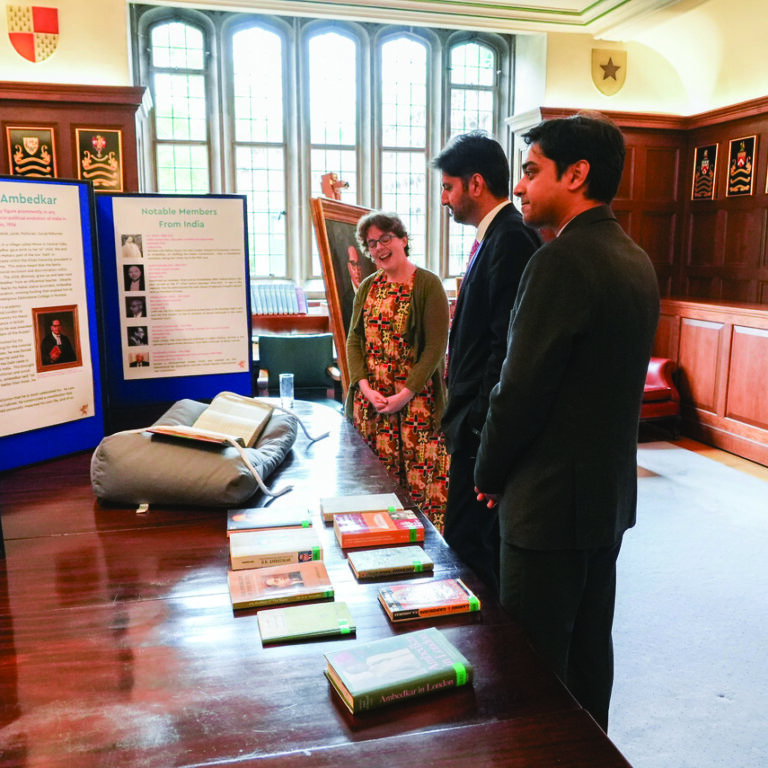
Master Timothy Shuttleworth reports on the 75th Anniversary celebration of the Indian Constitution at Gray’s Inn, honouring Dr. Bhimrao Ambedkar, a Gray’s Inn member and key architect of India’s democracy. The event, held on 5 June in Hall in collaboration with the Indian High Commission
Gray’s Inn Scholarships 2025
The Inn is delighted to announce the recipients of this year’s scholarships, including awards for the Bar Course, GDL, Senior and Ann Goddard Scholarships, as well as Internship Scholarships.

Inn the Village: Havens for the spirit – Part II
Daniel Dovar explores four historic and cultural institutions near Gray’s Inn, from the architectural and historical richness of St Dunstan’s in the West and St Andrew Holborn, to the vibrant cultural offerings of Pushkin House and the Swedenborg Society.
From the Treasurer
Master Geraldine Andrews I am often asked the well-meaning but misguided question: ‘how are you enjoying being Treasurer?’ Being Treasurer is not about having a good time, as the question…