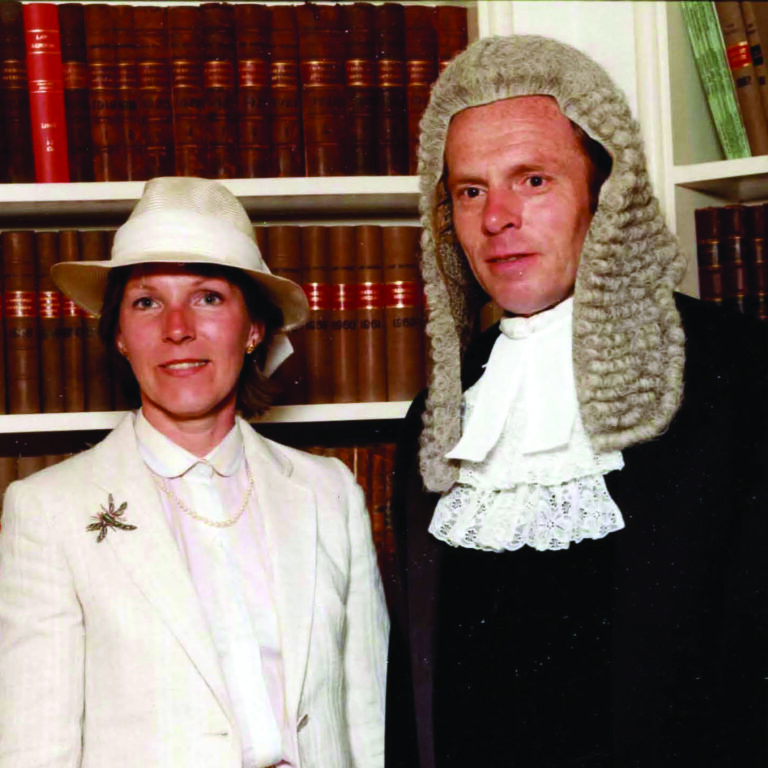
A conversation with Master Joshua Rozenberg
Number 45, Autumn 2025
Master Stephen Wooler
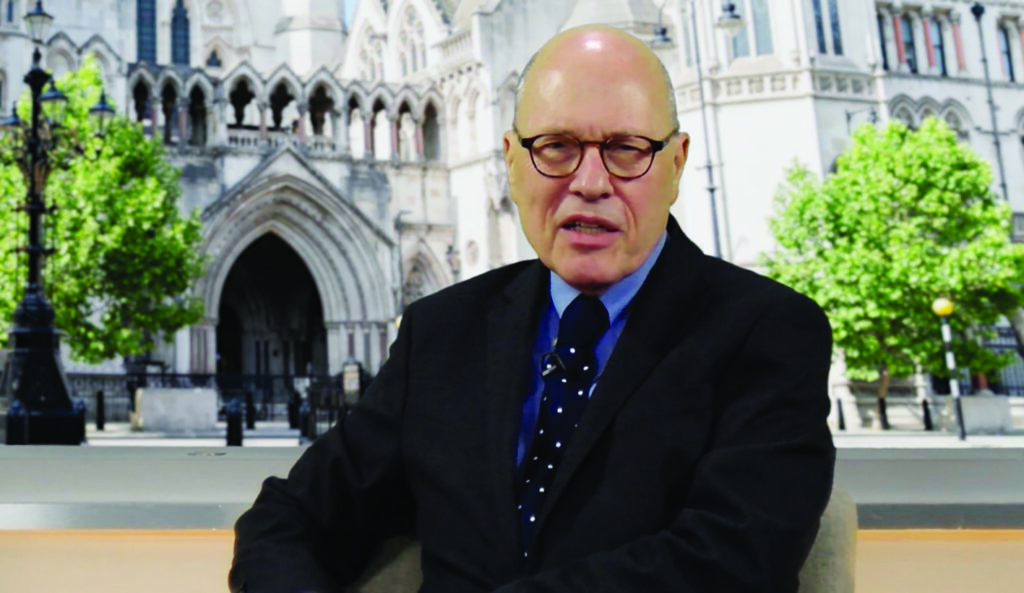
Master Rozenberg celebrated 50 years as a journalist this year. He has successfully combined understanding of the law, legal professions and justice system with a reputation for integrity and industry to earn unrivalled respect and admiration amongst practitioners and judges alike. His written and broadcast works invariably address the key issues in a balanced and measured way – wisdom and gravitas personified. His most recent book, Enemies of the People?, published in 2020, did much to redress the balance following unjustified criticisms of the judiciary.
When and why did you switch from law to journalism? What was your early experience?
I qualified as a solicitor in 1976, the year after I had joined the BBC as a trainee journalist. Despite my interest in law, I was keen to try other things. The graduate training scheme allowed me to work in different newsrooms around the country. I gained experience as a bulletin writer, producer and finally as a reporter. It wasn’t always smooth. In Manchester the news editor had three dislikes – graduates, southerners and those with no newspaper experience. But I survived, despite ticking each box! I had no aspirations to become a legal journalist. As a reporter, I had to cover whatever was happening – an early assignment was the 1976 drought. However, as managers and colleagues learned of my legal background, they steered the work in my direction. In 1984, I became the first presenter of Law in Action – a Radio 4 programme that lasted for 40 years. But the BBC did not have a dedicated legal correspondent until I was appointed in 1985.
What are the biggest changes you have noticed in the legal world?
Personal relationships are different. Many of the old formalities around dress, the way lawyers spoke to each other and communicated have gone. But there were more people involved in many things and they were gentler. Practices were more broad-based and people simply trusted each other more. Clerks took their principal’s affidavits to other solicitors to swear and witness when it ought to have been done in person. Security was more relaxed. During my 1968 gap year (before going to Oxford to read law), I was an outdoor clerk regularly walking through West Green in the Royal Courts of Justice carrying large sums of cash to Somerset House for the Inland Revenue to stamp documents. Times have changed and it now resembles Fort Knox. Cash has all but disappeared too.
Relations between solicitors and the Bar were good but different. I got the impression that the solicitors I worked for knew little law and found it easier (or cheaper) to send the work to counsel.
On the positive side, both the legal professions and the judiciary have warmed to technology and moved towards greater openness. Much greater use is made of data. The televising of the Supreme Court was a great step forward. Having cameras in the Court of Appeal is good but why not the Administrative Court? Advances usually have downsides, and I go back to the days when the European Court of Human Rights in Strasbourg had no means of distributing judgments as they were delivered. In order to cover cases, journalists had to visit the court. So, any significant judgment affecting the UK saw a phalanx of journalists on the plane. It was quite a club and particularly agreeable in the asparagus season.
Has journalism changed comparably?
Definitely so. When I started as a journalist, the BBC was the main player and was always at court for the big stories, covering them in its measured way. The growth of media outlets and the immediacy of new technology inevitably changed the dynamics with fewer reporters but more commentators. This has gradually eroded the traditional approach of factual and neutral news presentation. The modern tendency is to hype up stories with emotive adjectives.
The BBC certainly used to be more serious. Viewers and listeners were treated as educated and credited with a reasonable attention span.
What about the hairy moments and the more satisfying ones?
Plenty of both. Reporting live from the High Court, I once tried to deliver a scripted summary of a judgment without the benefit of Autocue and ended up stumbling messily over a piece I had no chance of memorising.
Another near miss came one evening when I was in Birmingham and using a makeshift studio to record my report of an embargoed story. Radio Birmingham itself was off air and the transmitters were switched to Radio 2 for the night. Unfortunately, I managed to activate the control that turned the studio live and my report went out rather prematurely across the West Midlands. Fortunately, nobody appeared to have been listening.
A more satisfying moment came when I was again reporting live outside the Home Office as Jack Straw (then Home Secretary) announced that General Pinochet was to be sent back to Chile on health grounds. The studio presenter then confounded me with the question: ‘What is the reaction in Chile?’ The true answer would have been: ‘I haven’t a clue – and it’s 4.00am there so most Chileans will still be in blissful ignorance’. Happily, I was standing close to a Chilean television reporter who had been interviewing a commentator in Spanish for some time. I grabbed the commentator in mid-flow, pulled him in front of my camera and got him to answer my questions in English. Nobody seemed to mind.
Presumably you sometimes had to move very fast indeed?
Frequently so. One evening, when I was at home in Chiswick, the phone rang at about 8.40pm. The newsdesk wanted me to comment on a breaking story live in the studio for the 9.00pm bulletin (as it then was). ‘You’ll never do it!’ said my wife. But I jumped in the car, reached the studio in Shepherd’s Bush, got the basics and was talking to the presenter part-way through the bulletin.
How did your 2000 move to the Daily Telegraph come about?
At the time, the BBC was encouraging early redundancies, especially staff on their final salary pension scheme. The Telegraph made me a good offer to take over from their legal editor, Terence Shaw, who was retiring. So, I moved to print while continuing to cover pretty much the same stories.
Footage or column inches – which is best?
Nothing beats the immediacy of live broadcasting on a developing story.
You left The Telegraph over a point of principle. Can you share that?
In 2007, I reported on a House of Lords ruling about the applicability of the Human Rights Act 1998 outside the UK. Editorial staff wanted to present the outcome as entitling civilian victims of military action to compensation for actions taken by British army in Iraq. I declined to amend the copy because I did not believe that to be true. However, the assertion was added and it appeared under my by-line. That was unacceptable and I resigned from the staff. I managed to keep writing my weekly column as a freelance for another year or so.
Life after The Telegraph. Many readers will be subscribers to your comprehensive legal blogs but what other opportunities did freelancing open up?
I still do a certain amount of legal punditry, and I chair or address legal conferences. But A Lawyer Writes – and the associated podcast A Lawyer Talks – now take up most of my time. Each piece is currently emailed to 21,000 subscribers – although not all of them take the paid service yet.
You turned 75 this year and are still as industrious as ever. So, you must love your role?
Very much so. I believe I am providing a useful service. And there are advantages in having a sense of perspective on long-running stories, such as trial by jury. For example, Lord Roskill proposed dispensing with juries for complex fraud trials back in 1986. But the justice system is constantly changing, which makes it fascinating.
You have received many accolades – no fewer than four honorary doctorates, service as a non-executive board member at the Law Commission, four-times winner of the Bar Council’s legal reporting award, honorary silk and being made an Honorary Bencher of Gray’s Inn. Which has given you greatest satisfaction?
Without a shadow of doubt, being an Honorary Bencher. It has enabled me to rent a flat in Gray’s Inn and to feel a real affinity with the Bar in general and the Inn in particular. I love the environment, the ethos and the fellowship. It was one of my proudest moments when the then Treasurer, the late Master Anthony Butcher, approached me to ask if I would accept the Inn’s invitation.
Explore more from this edition
Dr Ambedkar’s ‘Living Document’
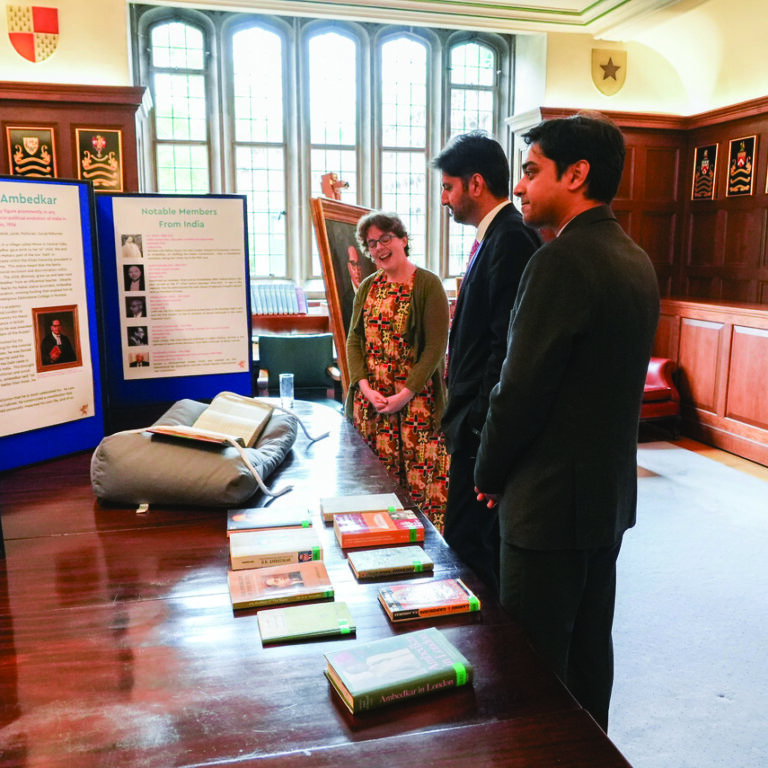
Master Timothy Shuttleworth reports on the 75th Anniversary celebration of the Indian Constitution at Gray’s Inn, honouring Dr. Bhimrao Ambedkar, a Gray’s Inn member and key architect of India’s democracy. The event, held on 5 June in Hall in collaboration with the Indian High Commission
Griffin at Large
This issue of Graya News comes in two formats: in hard copy and in a digital version delivered via a new dedicated digital magazine website, with the option to read a PDF version…

Inn People: Philip Craig, Hall Butler
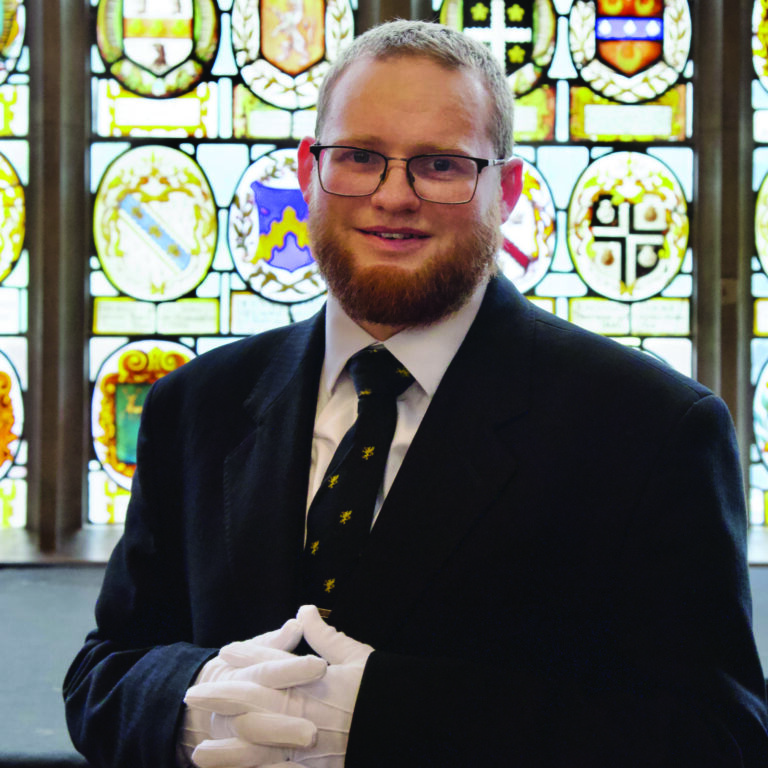
Master Gwynfor Evans. If you have ever dined at Gray’s then you will recognise the warm and welcoming face of Philip Craig, Hall Butler. We caught up in the Bridge Bar…
My Call to the Bar
Master Richard Hawkins reflects on his early days at the Bar, from his pupillage with John Mathew in 1963, through his first criminal trial and fortunate acquittal, to working with Dick Lowry and Nina Lowry, the first woman appointed as a judge at the Old Bailey.