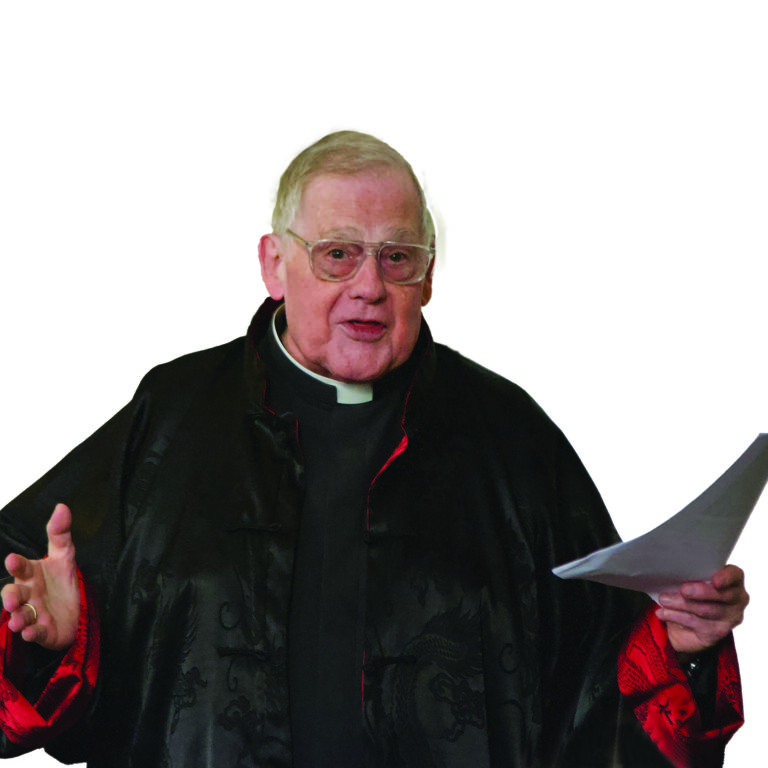
Griffin at Large
Number 45, Autumn 2025
Our new dual format
This issue of Graya News comes in two formats: in hard copy and in a digital version delivered via a new dedicated digital magazine website, with the option to read a PDF version of the paper copy. You can have both electronic and paper, or just one, as you wish. Whichever you have chosen to receive, we hope you will continue to enjoy this biannual magazine ‘for and about Gray’s Inn and its Members’ that is handsomely produced and free of charge. You can check that you will receive Graya News in the way you wish by updating your contact preferences via your GIOS (Gray’s Inn Online System) account. Or contact member services if you are not sure. Lest there be any doubt, the Graya Board remain committed to continuing to make the magazine available in printed form because we know the pleasure of reading about events and life at the Inn with the magazine physically in your hands, enabling you to turn the pages without swiping across or blowing up the image to a size that compensates. We know only too well how subscribers feel when liberated from digital alerts and interruptions in a world that is occupied by screen time. In this context the remarks of Dr. Tristram Hunt, Chairman of the Victoria and Albert Museum, are perhaps relevant. Speaking a few weeks before the opening of the V&A East Storehouse at Stratford, East London (housing a collection of artefacts previously hidden away ‘in the attic’ at the V&A), Hunt declared that the new exhibition site ‘won’t be touch- focused, it will be about the power of looking. The loss of concentration and the loss of motor skills is so sad. We need a morning a week where everyone … writes with a pen to get the skills going and not just swipe …’.
Promoting wellbeing
Griffin offers hearty congratulations to all at the Inn who were instrumental recently in securing for the Society a Certificate of Recognition awarded by the Bar Council to Gray’s for its work on promoting wellbeing in the profession. The precise wording of the citation reads: ‘For invaluable work in demonstrating commitment to wellbeing in the barristers’ profession.’.
Those who lead the Bar have been deeply conscious for some time of the stress experienced by many in the profession, including clerks and other staff, who feel under pressure from their work, particularly where that stress risks mental health breakdown. The Award recognises the efforts of those who ‘go above and beyond’ to support aspiring and practising barristers, their clerks and other staff to build a more compassionate and resilient profession.
This news comes alongside the results of the most recent survey conducted by the Bar Council amongst pupils. Of those who responded, fewer than a third would ‘definitely’ recommend becoming a barrister, down from 42% last year. High stress levels and well-being emained some of the most frequently mentioned concerns.
Gauke and Leveson Reports
It is over one hundred years since as Home Secretary, Winston Churchill was to declare in debate: ‘The mood and temper of the public in regard to the treatment of crime and criminals is one of the most unfailing tests of the civilisation of any country’. Just how lamentably slow we have been to recognise such tests of the country’s civilisation is perhaps explained by the lack of votes in criminal justice. Successive administrations share responsibility for the present state not only of our prisons but for every aspect of criminal justice where, despite an enduring lack of support and occasional political hostility, the profession seeks to discharge responsibilities which others have all too long preferred to delay if not ignore. The challenge is not just for us as lawyers. In the words of Dostoevsky, a man who knew a bit about Crime and Punishment, nearly two centuries earlier: ‘The degree of civilization in a society can be judged by entering its prisons.’
Gauke
The final Independent Sentencing Review’ by the Rt Hon. David Gauke was published in May this year after a short consultation period following an initial report. Some may find it ironic that a Labour government turned to a former Conservative politician to tackle its unhappy inheritance at the Ministry of Justice, whether in the form of inordinate delays in the courts or in the rush to release prisoners to make way for the next cohort to share overcrowded and sometimes insanitary accommodation. Some readers may have seen the Matt cartoon immediately ahead of publication showing a judge telling the defendant: ‘I’ve booked you a cell on May 16th at 1 pm but we need it back by 3 pm’.
Necessity, always an unreliable form of defence and, in context, perhaps even an early apology for some of the proposals, has explicitly been the declared driving force behind these proposals. The problems of space in the prisons should have been obvious to Mr Gauke’s old colleagues. Nevertheless, the Opposition attacked the Report saying that it was a gift to criminals because offences of burglary and other thefts would effectively be decriminalised. The Victims’ Commissioner, Baroness Newlove, expressed concern at the pace of change proposed when the Probation Service was already so stretched.
The most immediately obvious public worry about the Gauke proposals concerned the reduction in time to be served. The fraction has been changed frequently after the Criminal Justice Act 1991 so an inmate might serve two thirds, one half and, since the latest emergency ‘early release’ scheme, forty per cent. The Report recommended releasing a prisoner after a mere one third of the term, but the government decided to scrap automatic release completely, and instead to go for earned early release only, which will save far less than the Gauke proposals would have done, but has neutralised concerns about too many early releases.
The Sentencing Act 2020 has as its purpose punishment, the reduction of crime, reform and rehabilitation along with the protection of the public. Inevitably and rightly, the Report recognises that punishment and public protection are pivotal considerations. That said, and fully conscious of the £54,000 per annum or so each inmate costs the taxpayer, the courts are to be encouraged if not forced to make greater use of punishment outside the walls of prison. In this, an ever higher burden of effort is proposed for the Probation Service which, after the loss of morale caused by the damage done to that service by the botched, costly ‘reforms’ and now reversed partial privatisation by the last Conservative administration, will need to recruit more Probation Officers and, this time, to fund their work properly if the proposed greater use of Community Orders is to have any realistic prospect of success in achieving those aims of sentencing. The Government responded to Baroness Newlove’s concerns, and those of many others, by promising more money for the stretched Probation Service.
The decreased use of short sentences is a major plank in the plans. In order to impose one, the court has to find ‘exceptional circumstances’, which by definition will be rare. Gone are the days of enthusiasm for the comforting sound of the clang of the prison gates with a ‘short, sharp, shock’ for youthful miscreants in a Detention Centre for up to 3 months. The main achievement of this earlier policy was said to be to turn out young criminals able to run faster than the police. The efficacy of short sentences had already been the subject of judicial notice as in the judgment of the Court of Appeal in R v McInerney [2002] EWCA Crim 3003:
‘As is now well known there is an extremely high level of re-offending by those released from convictions for offences such as domestic burglary. Furthermore, the Prison Service accepts that there is little it can achieve in the way of turning offenders from crime during the course of a sentence of up to 12 months.’
The Report recommends a more targeted approach in respect of certain groups, including specific consideration of women and girls. Where women have been the offenders the courts have increasingly sought to avoid imprisonment of mothers or pregnant women, added impetus being caused by the much publicised and demeaning treatment of a woman who gave birth while being handcuffed to a prison officer.
The most eye-catching proposal has been in relation to sex offenders, which the Government accepted as a pilot scheme. The Justice Secretary, Master Shabana Mahmood, was so supportive of plans for the proposed chemical castration of sex offenders that she had already made plans for trials at no fewer than 20 prisons. Her enthusiasm extended even to planned examination whether this could be on a mandatory basis, a form of punishment replete with the obvious prospect of challenge through the courts under Article 5 ECHR (cruel and degrading punishment), Article 8 ECHR (interference with family rights) and simple assault. Whether the relevance of a successful appeal against conviction out of time has been fully considered is less than pellucid unless the effects can be fully reversed either by ending the medication or administering other drugs to restore potency and perhaps resolve the side effects of such drugs. The administration of medical treatment of this kind may also give rise to resistance by doctors for ethical reasons if placed in an invidious position. The forensic psychologist Prof Belinda Winder made a further point:
‘If offenders are being coerced and forced, you’re just pushing the problem somewhere else. You might reduce the sexual urges but you’ve perhaps increased their hostility, aggression and sense of having a grievance.’
Vigorous debate will no doubt continue.
Leveson
Part I of Sir Brian Leveson’s Independent Review of the Criminal Courts was published on 9 July. The Report makes 45 recommendations, most of which would require primary legislation to be implemented. The most eye-catching proposals relate to measures to cut down the number of cases proceeding to jury trial. Sir Brian recommends that the Government should consider restricting the right to elect trial by jury in cases with a maximum of two years’ imprisonment (recommendation 14) and replacing the right to trial by jury with that by judge alone in serious and complex fraud cases or other cases of exceptional length and complexity (recommendations 43 to 45). In addition, he proposes the creation of a new division of the Crown Court consisting of a judge and two magistrates which could try either way cases (recommendation 30). Reaction has ranged from grudgingly in favour to unfavourable, although alternative proposals to cope with the crisis in the criminal courts are thin on the ground. Master Shabana Mahmood is having a busy summer as she has promised to consider the proposals now and come forward with the Government’s full response in the autumn.
Drones and Drugs
Even if the Gauke proposals are adopted, they will unfortunately do nothing to end the drug culture in our prisons. In a recent article appearing in a weekly magazine that ought to have been given greater publicity, Charlie Taylor, H.M. Chief Inspector of Prisons, points to the disturbing amount of drugs ‘pouring into every prison in the country’, largely dropped off to prisoners via drones and ‘dispersed round the prison in hours’. There are very significant drone incursions at Manchester and Long Lartin prisons (he says) where some of the most dangerous men in the country, including terrorists and organised crime bosses, are placed. One can only agree with the Chief Inspector when he expressed this fear: ‘If weapons or explosives get into one of these jails, the consequences could be terrifying’. Mr Taylor concludes that all we are managing to do as a nation at present is to spend large amounts of money ‘to keep criminals locked up in cells, stoned on drugs and watching daytime television’
Citing ‘Fake Authorities’
The Court of Appeal was left in no doubt when reviewing a recent case that the threshold for initiating contempt proceedings and/or referring Counsel to the Law Officers had been met in a case where Counsel, a pupil barrister, had sought to rely on five ‘fake citations’ when either using or being suspected of using generative AI tools.
Even though the Court decided to leave matters in the hands of the Bar Regulator and the BSB to investigate, it was nevertheless made clear that there were ‘serious implications for the administration of justice and public confidence in the justice system if artificial intelligence was misused’. If Counsel failed to cross-check the accuracy of what had been generated by AI, then they risked ‘severe sanction’.
Is the mischief uncovered here, at least in part, the result of a lamentable lack of oversight of a practitioner who was an extremely junior lawyer, in the words of the judgement, and a pupil still in training?
Griffin has expressed in previous columns concerns about whether the pupillage system suffers in some sets nowadays because of the absence of too many senior members who are regularly working from home or rarely visiting Chambers.
Explore more from this edition
A conversation with Master Joshua Rozenberg
Master Stephen Wooler Master Rozenberg celebrated 50 years as a journalist this year. He has successfully combined understanding of the law, legal professions and justice system with a reputation for…
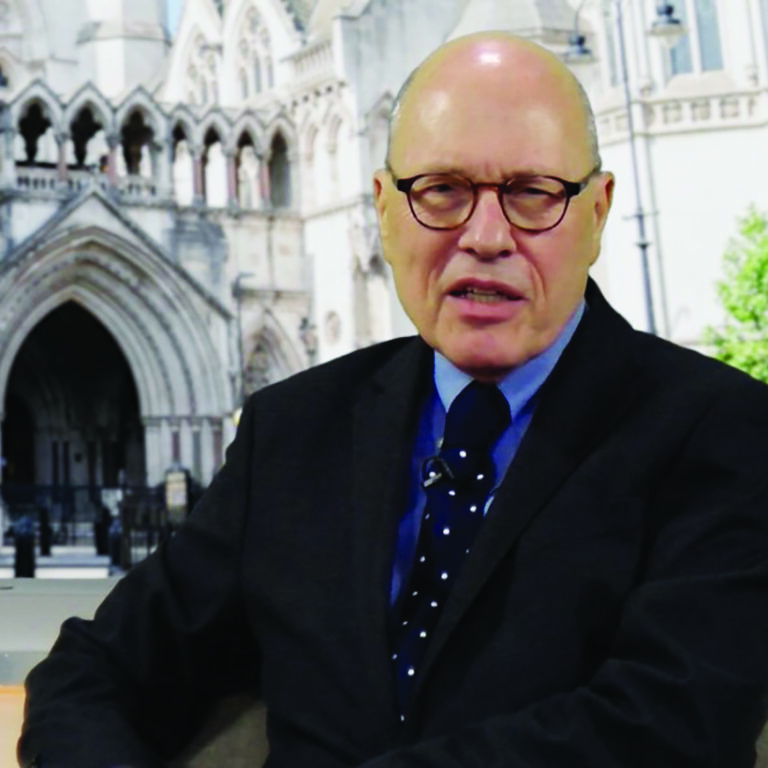
Inn People: Philip Craig, Hall Butler
Master Gwynfor Evans. If you have ever dined at Gray’s then you will recognise the warm and welcoming face of Philip Craig, Hall Butler. We caught up in the Bridge Bar…
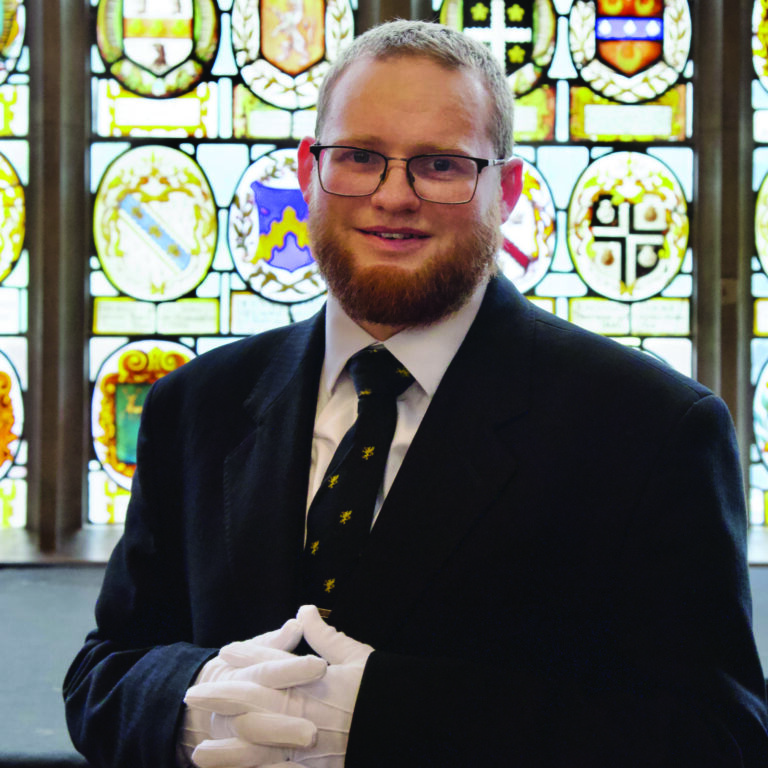
Inn the Village: Havens for the spirit – Part II
Daniel Dovar explores four historic and cultural institutions near Gray’s Inn, from the architectural and historical richness of St Dunstan’s in the West and St Andrew Holborn, to the vibrant cultural offerings of Pushkin House and the Swedenborg Society.
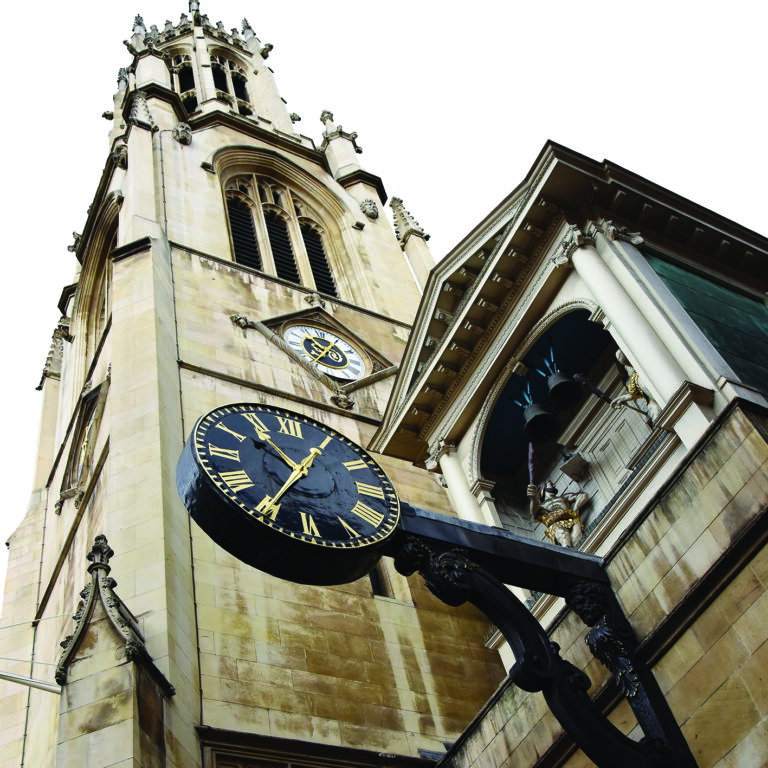
Pictures, Words and Music
On Thursday 10 July 2025, Revd Stephen Baxter convened another Pictures, Words and Music event in the Chapel, featuring the Chapel Choir under the direction of Master Christopher Bowers-Broadbent, with organist Joshua Simoes and the Venerable Peter Delaney MBE.