
Ena Collymore-Woodstock – A Remarkable Life
Number 46, Spring 2026
Master Meyric Lewis
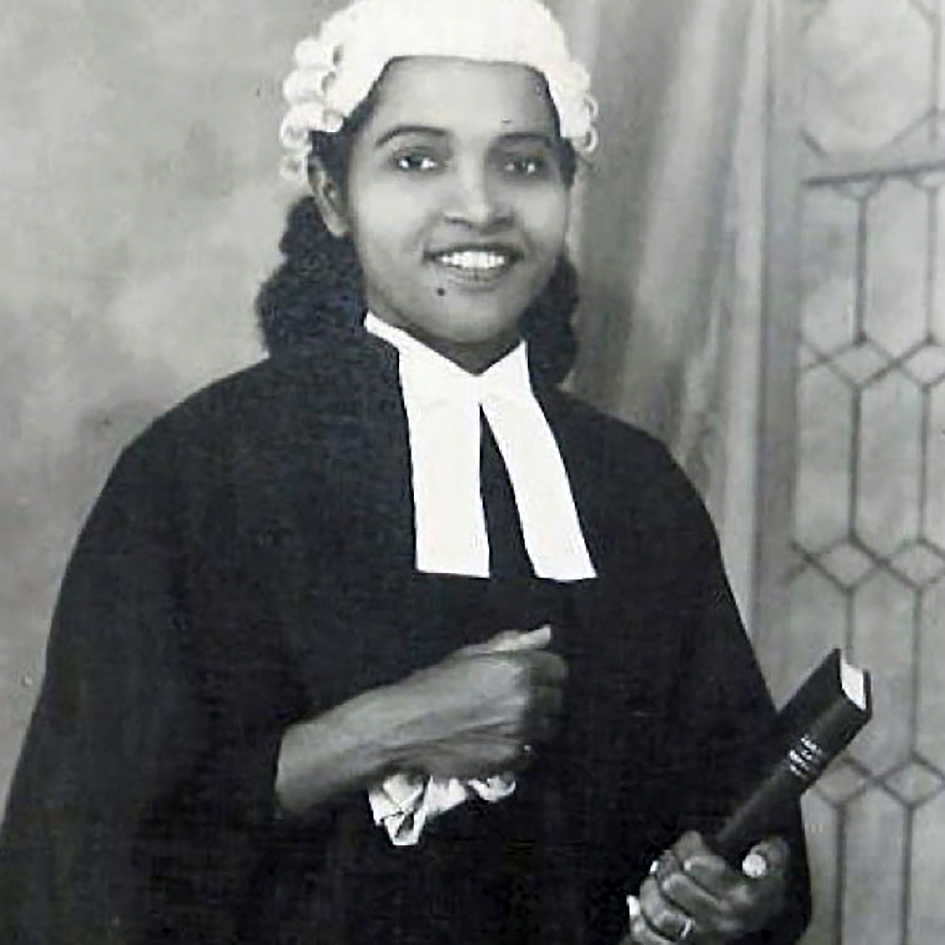
10 September 1917-2025
Ena was called to the Bar at Gray’s Inn in 1948
Ena Collymore-Woodstock OD MBE, Jamaican barrister and magistrate, one-time trainee nurse, Second World War anti-aircraft radio operator, Chief Commissioner of the Girl Guides for Jamaica and a member of Gray’s Inn since 1946, has died at the amazing age of 108.
Throughout her long life she broke many barriers to the employment of women in jobs traditionally regarded as the preserve of men and championed women’s entitlement to pursue their chosen profession: ‘Women can do the same as men. Don’t limit yourself because you’re a woman.’ When she died, she was the oldest surviving female veteran of the British Army of the Second World War.
Mrs Justice Marva McDonald-Bishop, President of the Jamaican Court of Appeal, paid tribute to her achievements: ‘Her legacy is not confined to the courts she presided over but lives on in the culture she cultivated, a judiciary that prizes talent, integrity, and excellence above all else. She was a true architect of transformation.’
She was born in Spanish Town, Jamaica, on 10 September 1917 to Madeline and Frank Collymore. Her mother got a job as postmistress after Ena’s station master father’s early death. Sadly, Madeline died shortly after Ena’s graduation from high school. After working as a bookkeeper for a bakery, Ena applied to be a temporary court clerk at Kingston Magistrates’ Court but was not offered the job because it was not regarded as suitable for a woman. It had been expressly advertised as a post for a ‘male clerk’. But she persuaded them to take her on, on probation. She told the Jamaican Nation News ‘Only men were in the office in those days and when I turned up, everybody was looking at the application’. Apparently other male staff would pop by for a look at ‘this young miss who applied for the job of male clerk’. ‘They gave me cases to type and asked me “is it all right” because one of the cases was called rape. I said ‘no, everything is all right’, but I did not know what rape meant!” She went on to be employed full-time in the Kingston Court Office. ‘I was looked on as quite a novelty for some years’.
In the Second World War, she was one of the first women from the Caribbean to join the Auxiliary Territorial Service in the British Army when, in 1943, women of colour were at last allowed to join up. She survived a torpedo attack on her Atlantic crossing. She was employed initially as a typist but complained to the War Office that she ‘didn’t come here to do what I did at home’ and so, after passing an evaluation test and being told she could choose any role, she took up a post as a radar operator (another first for a Black woman) for an anti-aircraft unit stationed in the UK and later in Belgium, monitoring V-1 flying bombs and enemy aircraft. ‘I was very adventurous and wanted more responsibility and more action’.
In 1943, she met the then Princess Royal, Princess Mary, at an ATS reception at the Colonial Office. ‘There weren’t that many women in the Army. Very few women of colour either. I felt special’. ‘We all knew we were doing things for the first time.’
After the War, she read for the Bar at Gray’s Inn, joining the Inn in 1946. She was popular among students and was elected Vice President of the Inns of Court Students Union and Treasurer of the West Indian Students Union. She was the only woman on the students’ debating team.
She was called in January 1948. On her return to Jamaica later that year she went back into the Court Service and served as a Deputy Court Clerk and then Court Clerk, the first woman to be appointed to that position in Jamaica.
She married Victor Woodstock in 1951. She was appointed Assistant Crown Solicitor in 1953, again the first woman in Jamaica to take on that role. Her husband’s job as a civil servant took him away from home so Ena would sometimes have to take her children into work. ‘I used to put my baby son in his bassinet and drive around Jamaica to court. When they were older, the children would sit under my feet in court while I acted as a Judge’.
In 1959, she became Jamaica’s first female Resident Magistrate. She also chaired Jamaica’s Juvenile Court, having studied juvenile delinquency at the University of London while reading for the Bar and, in preparation for taking on her new duties, in the United States.
For her long service to the Girl Guides, including ten years as Chief Commissioner for Jamaica, she was awarded an MBE in 1967.
She was awarded the Jamaican Order of Distinction for her contribution to Jamaican justice in 1975. She also served as a Judge of the Grand Court of Grand Cayman, Acting Judge and member of the Legislative Council of the Turks and Caicos Islands and, after retirement in 1977, continued to sit as a magistrate in the Turks and Caicos and Anguilla. She was named a Pioneering Caribbean Woman Jurist by the Caribbean Court of Justice Academy for Law in 2021.
In addition to her professional achievements, she devoted much time to the church and to volunteering for Soroptimist International (motto: ‘Standing up for Women and Girls’) in Jamaica where she was instrumental in lobbying against discrimination in salaries for women, in the establishment of the Family Court and the promotion of legal rights for children born out of wedlock. She also encouraged businesses to provide child-care spaces and urged local newspapers to delay publication of their daily editions until after school hours so that children could both finish the school day and have the chance to earn money on delivery rounds.
Her ground-breaking career and extensive public service reshaped Jamaica’s justice system, expanded opportunities for women and were a source of inspiration at home and abroad. Indeed, her influence was widespread. She travelled a great deal and was delighted to be told by an immigration officer when entering the US on one occasion that she knew who she was because she had done a school project on her.
Many women in her family followed in her footsteps. Three of her four grandchildren are lawyers, continuing the illustrious tradition established by their grandmother. Ena died on 2 December 2025 at the age of 108.
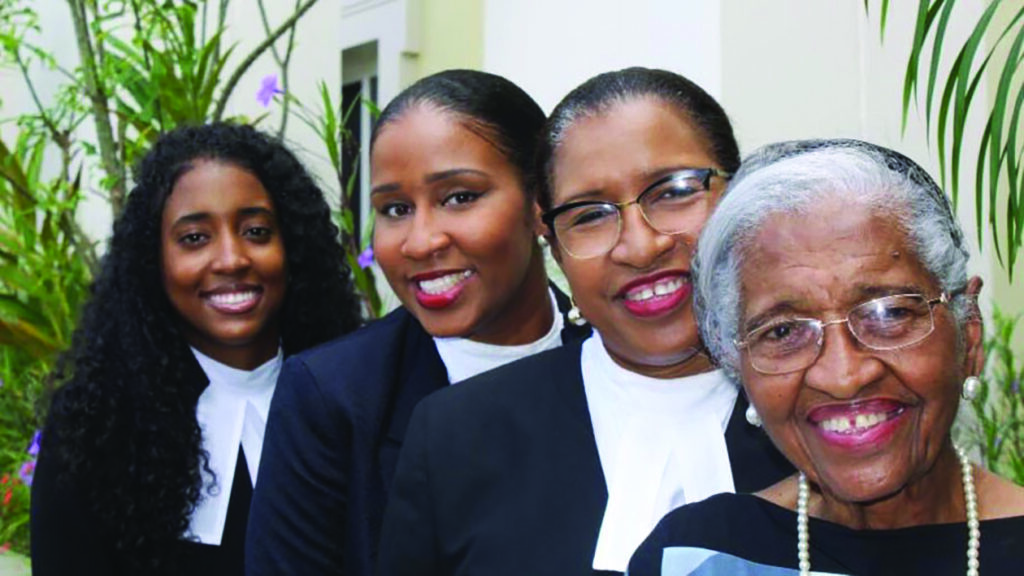
Generations of lawyers (L to R) Ena’s grandchildren, Raisa St. Clare and Amanda Riley-Jordan, her daughter, Marguerite Woodstock Riley and Ena herself at Raisa’s call to the Bar in Barbados.
Explore more from this edition
History Society Lecture
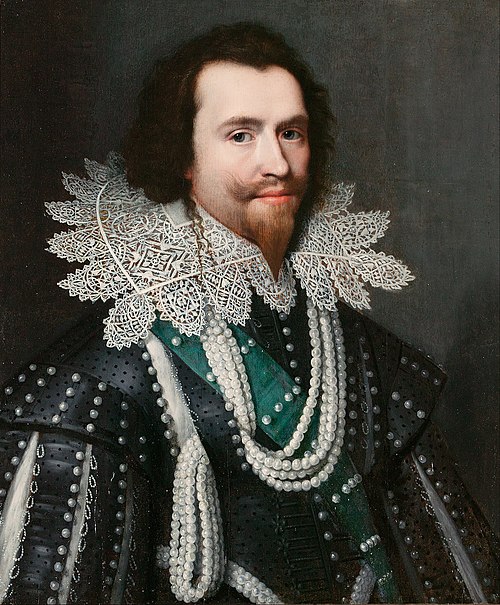
A dazzling royal favourite rises and falls: Lucy Hughes‑Hallett FRSL reveals how George Villiers, first Duke of Buckingham, became both powerbroker and pariah – loved by kings, blamed by a nation, and immortalised as history’s scapegoat.
Book Reviews
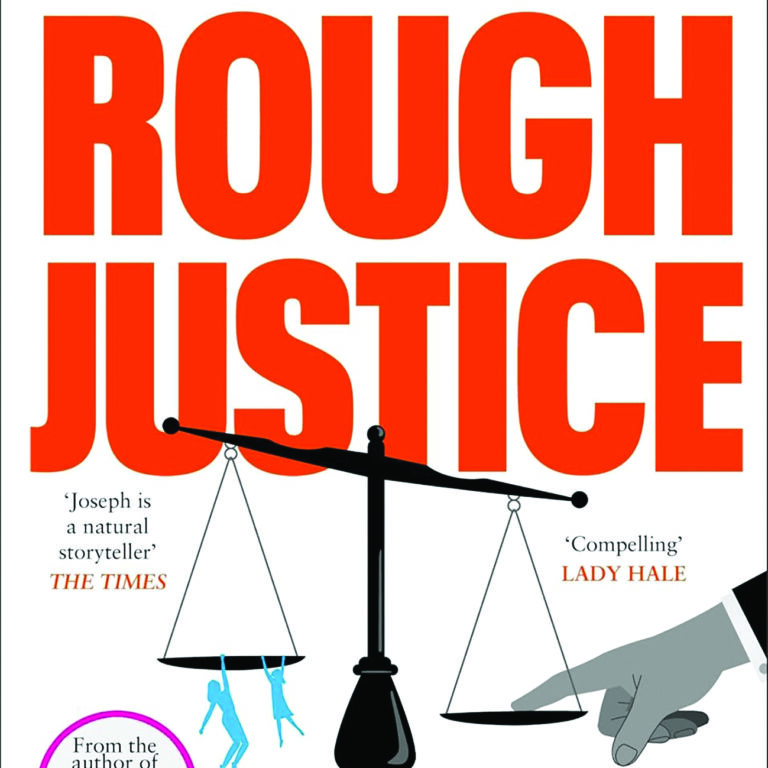
Two compelling books – one exploring justice by an experienced judge in the Old Bailey with a focus on women and girls, the other, and exploration of law and science through a biography of pioneering British physicist and astronomer Sir Bernard Lovell.
Notices
Key announcements including New Benchers, New Silks, recent deaths and Notices from Pension.

From the Treasurer
Master Andrew McFarlane reflects on a lifelong bond with Gray’s Inn, from his first visit to the Inn at the age of 17, to his role as Treasurer in 2026.